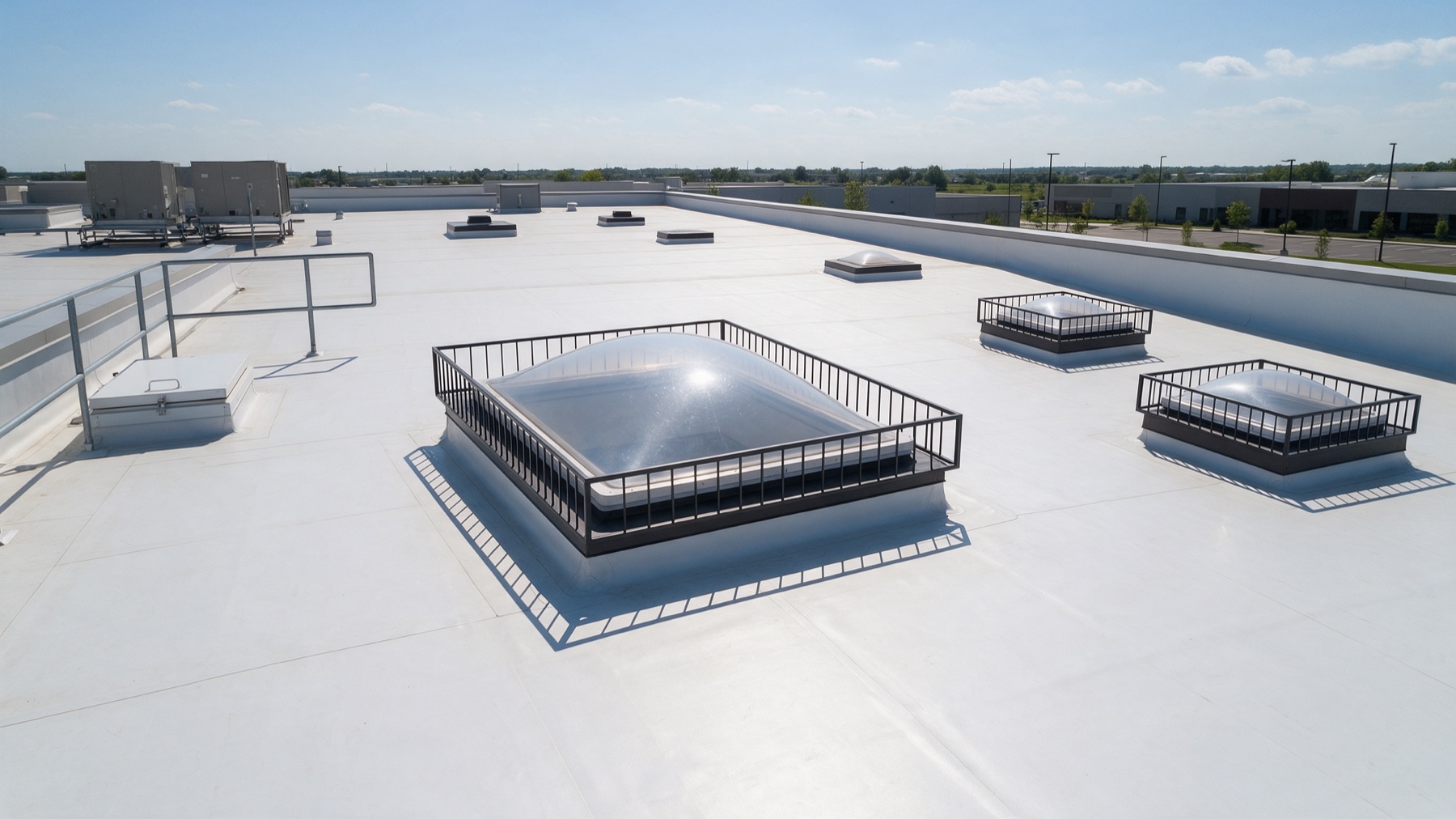
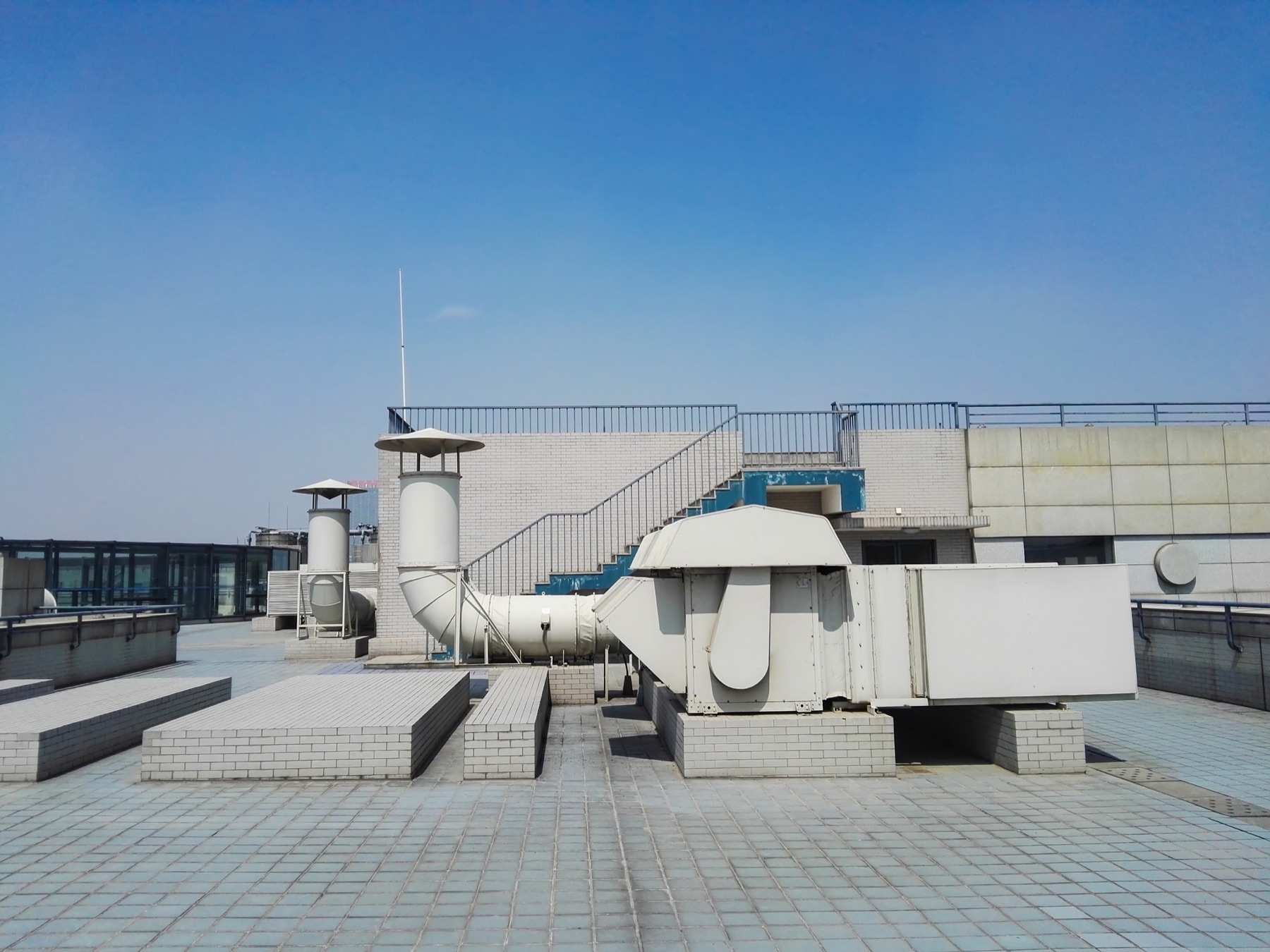
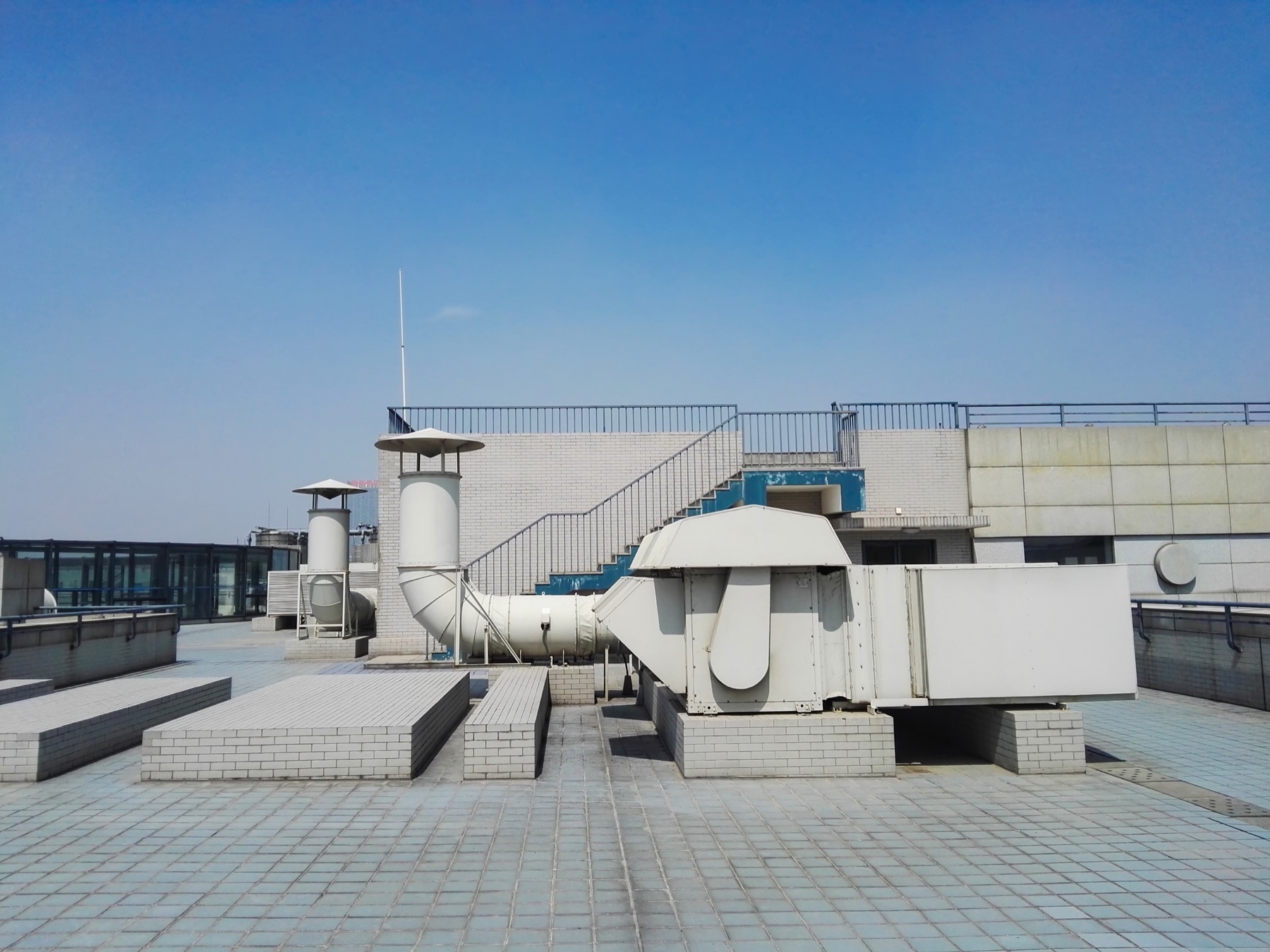
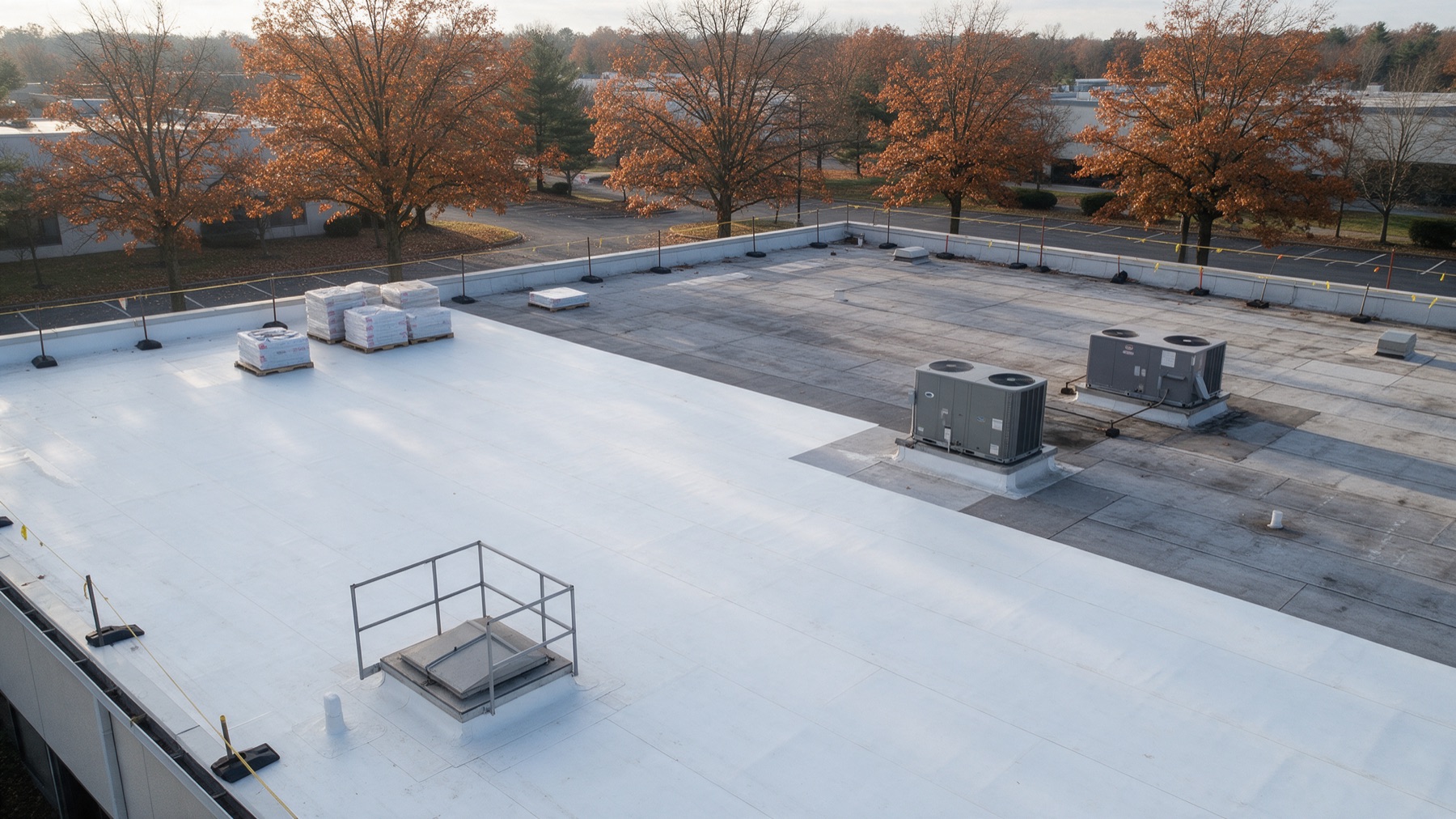
If your building has skylights, commercial roof skylight fall protection is a question about your people, not just your roof. A skylight looks like a solid surface. It is not one. Under OSHA's walking-working surfaces rule, a skylight is a hole, and the rule treats it that way on purpose.
This post is for facility managers, building engineers and boards who want to know what the rule says, how to audit skylight guarding from places that are safe to stand, and where your team's job ends and a roofer's or safety contractor's begins. Nothing here asks anyone to walk the roof.
What OSHA actually says about skylights
The relevant text is 29 CFR 1910.28(b)(3). It requires that each employee be "protected from falling through any hole (including skylights)". The wording matters: skylights are named in the rule, not left to interpretation.
The same section sets the usual protection methods for holes 4 feet or more above a lower level: guardrail systems, covers, travel restraint or personal fall arrest. For a roof, the lower level is the floor of the room under the skylight, which in most commercial buildings is well over 4 feet down.
Covers have their own requirements in 1910.29(e). A cover must be capable of supporting at least twice the maximum intended load placed on it at one time, and it must be secured to prevent accidental displacement. A plastic dome that happens to sit over the opening is neither of those things.
None of this replaces the roof-edge rules. Those are in 1910.28(b)(13): fall protection when work is within 6 feet of a low-slope roof edge, and for infrequent, temporary work further in, a work rule that keeps people at least 15 feet from the edge. The full table is in our fall roof maintenance checklist. Skylights sit in the middle of the roof, often well inside the 15-foot line, which is exactly why they catch people out.
Why skylights are the hazard people forget
- They look like part of the roof. Acrylic and polycarbonate domes can be dusty, scratched and weathered to the point that they blend into the membrane.
- They age. Sunlight and heat make plastic glazing brittle. A dome that carried a load when new may not carry one after years of DMV summers and freeze-thaw winters.
- Snow and leaves hide them. A skylight under snow or a drift of leaves is invisible. See our snow on a flat roof guide for why nobody should be out there clearing it.
- Contractors are the usual victims. The person on the roof is often a rooftop-unit technician, an antenna installer or a solar surveyor who was never told where the skylights are.
That last point is a policy problem your team can fix. Our rooftop contractor access policy is the right place to write skylight locations into the sign-in process.
The ground-and-interior audit
You can learn a lot about skylight protection without stepping onto the roof.
- Count and map them from the interior. Walk the top floor, atrium and stairwells and list every skylight and roof light by room and grid line. Compare the count to the roof plan. Skylights that are covered inside by a ceiling or a later renovation are the ones nobody remembers.
- Look at them from the ground and from neighbouring windows. With binoculars or from an adjacent building's upper floor, note whether each skylight has a screen, a guardrail or nothing at all. A photo from a safe viewpoint is a record. Our roof photo log guide shows how to keep one.
- Look for staining and cracking from below. Brown rings around a curb, daylight at the frame, or crazing in the glazing are findings for a roofer, not for you to probe.
- Check the access path. Where does the route from the roof hatch to the rooftop equipment pass relative to the skylights? Our hatch and ladder audit and walkway pad guide cover the first part of that route.
- Read your own paperwork. Is there a written roof access policy? Does it name the skylights? Does anyone sign for roof access?
A simple audit record
What good guarding looks like, in outline
A guardrail around each skylight, or a rated screen or cover fixed to the curb, is the standard idea. The details are the safety contractor's job, but your team should know what to ask for:
- Is the screen or cover rated for load, and by whom? OSHA's cover rule calls for twice the maximum intended load and secure fixing.
- How is it attached to the curb? Anything that depends on drilling through flashing is a roofing question because it creates new penetrations.
- Is it marked so that it is visible from a distance, including under snow?
- Is it independent of the glazing, so that a failed dome does not take the guard with it?
Some manufacturers sell retrofit screens and non-penetrating guardrails for existing skylights. Treat the maker's compliance claims as a starting point and ask a qualified safety professional to confirm the system suits your skylight and your roof before you buy.
What your team should not do
- Do not send staff to "just check" a skylight. The check itself is the exposure.
- Do not stand, kneel or lean on a skylight or its curb, ever.
- Do not caulk, tape or patch a cracked dome or its sealant. That is membrane and flashing work, and it needs a roofer.
- Do not let anyone onto the roof when it is wet, frosty, snowy or windy.
- Electrical, gas and HVAC work near skylights goes to the licensed trades, with the same access rules.
When it becomes a roofer's job
Call a roofer or a safety contractor when any of these is true:
- A skylight has no guarding of any kind. Restrict roof access until it is guarded.
- The glazing is crazed, cracked or yellowed through. Replacement or removal of the unit is a roofing and glazing job.
- You see water staining or daylight around the curb. That is a flashing question. See commercial roof repair.
- The skylights are on a roof you are about to replace. Skylight curbs are replaced or reflashed as part of a reroof, and guarding can be specified into the scope. See commercial roof replacement.
- You want a regular, documented condition check as part of a roof maintenance program.
FAQ
Is a skylight really considered a hole under OSHA?
Yes. 29 CFR 1910.28(b)(3) says employees must be protected from falling through any hole "(including skylights)". The rule applies wherever employees work on a roof, in any DMV jurisdiction.
Do we need guardrails around skylights if nobody goes on the roof?
The rule protects employees who work there, including your maintenance staff and anyone you direct to the roof. If contractors go up, their employers have duties too, but you control access. Guarding or a strict access policy is cheaper than an incident.
Can a skylight screen be installed by our maintenance team?
Not unless they are trained and protected for roof work. Installation means being on the roof, near the very hazard you are guarding against. Hire a contractor that handles roof fall protection.
How do I know if the skylight glazing is still strong enough?
You cannot tell from looking. Weathered plastic can look sound and fail without warning. Treat every skylight as unable to bear weight and guard accordingly.
Want a written condition report that maps every skylight, curb and access route on your roof? Book a free 30-minute consultation at https://dmvcommercialroofing.com/#book or call 202-798-7663.
Header image: AI-generated illustration (Magnific).