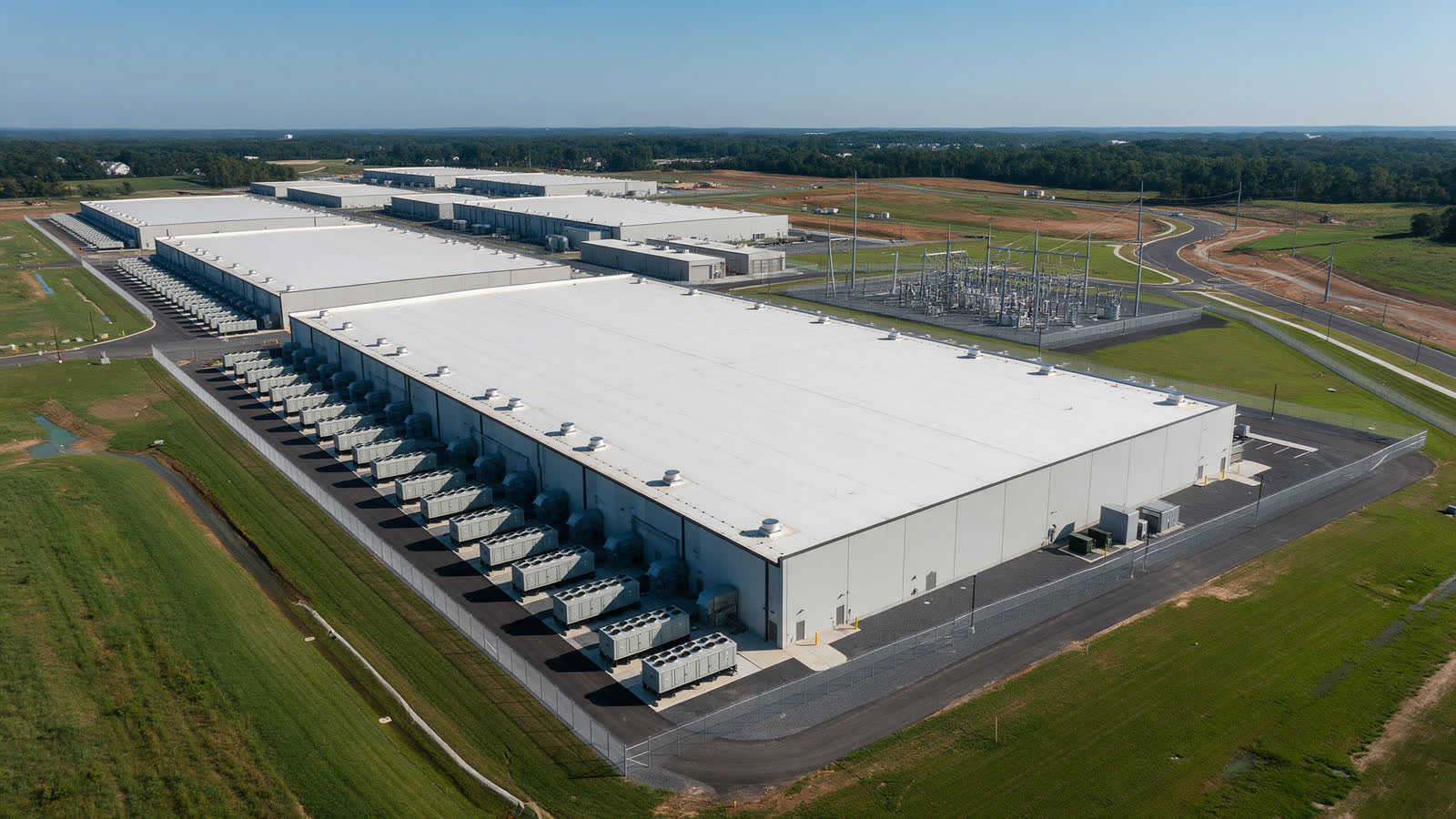
Loudoun contains the densest concentration of mission-critical roof area in the world. On those buildings the roof is not a maintenance item — it is a single point of failure over irreplaceable equipment.
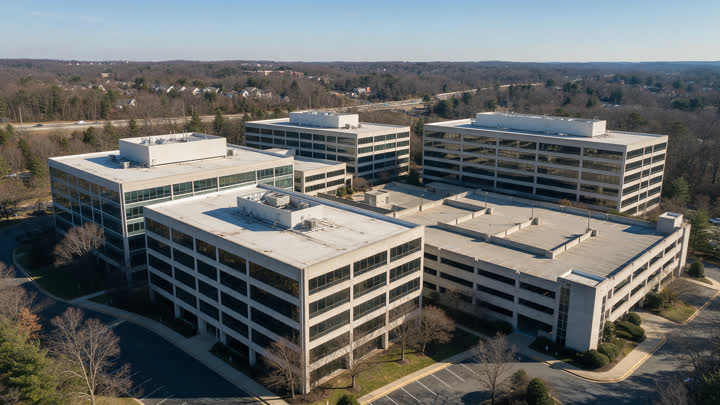
Ashburn and Sterling carry the data centre corridor: very large-format, heavily loaded roofs over facilities where water intrusion is a catastrophic event rather than an inconvenience, and where nothing can be shut down to accommodate the work.
The rest of the county runs from Dulles-adjacent industrial and distribution through newer suburban office, retail and hospitality in Ashburn and Leesburg, to a historic downtown Leesburg core with the small, complex, review-constrained roofs that come with it.
Permits & who issues them
Permits are issued locally, but the code being enforced is the same everywhere in the Commonwealth.
A building permit is required for commercial reroofing under the USBC. Ordinary repair below the code's threshold is exempt, but replacement, recover and any change to the assembly are not.
Pull it in the roofer's name. If a contractor asks you to take the permit out as the owner, they are moving liability for the work onto you. That is a reason to pick someone else.
The building code in force
Virginia enforces the Uniform Statewide Building Code. The 2021 USBC took effect January 18, 2024, with a one-year transition during which either the 2018 or 2021 technical provisions could be used; the 2021 edition stands alone now. Because the USBC is a statewide regulation, localities cannot make the technical requirements more stringent — what differs across Northern Virginia is process and turnaround, not the code.
You get two roofs, then you tear off
IBC §1511 prohibits a roof recover where the existing roof already has two or more applications of any roof covering. It also prohibits recovering when the existing roof is water-soaked or has deteriorated to the point that it is no longer an adequate base. In either case the code requires removal down to the deck. This is the single most common place a cheap bid quietly goes non-compliant.
Energy code drives the insulation, and the insulation drives the price
The DMV sits in climate zone 4. For low-slope roofs with insulation entirely above the deck, the IECC commercial table calls for roughly R-30 continuous. On an older building that was built with two inches of insulation, meeting that number is frequently the largest single line item in a replacement — and the reason a tear-off costs meaningfully more than the recover somebody quoted you.
Edges and corners are not the field
Wind uplift concentrates at perimeters and corners, and ASCE 7 requires tighter attachment in those zones. A bid that specifies one fastening pattern for the whole roof is either an oversight or a shortcut. Ask to see the zones called out.
Drainage is a code item, not a preference
Roofs need primary drainage plus a secondary (overflow) path sized so a blocked primary drain does not load the structure with standing water. On replacements we look at whether existing overflow scuppers are present and correctly set — on older DMV buildings they often are not.
Local rules that actually change the job
Mission-critical roofing is its own discipline
On a data centre or similar facility, the standard cost-benefit calculation inverts. Redundancy over critical space is worth paying for, hot work is prohibited, every penetration is a documented risk, and a leak-detection or monitoring layer is often justified where it never would be on an office roof. Work is planned around uninterrupted operation, with the building dried in at every stopping point and no exceptions.
Enormous rooftop mechanical load
Cooling infrastructure on these buildings is heavy, dense and continuously running. Roofing around it means coordinating with facilities on equipment that cannot be shut down, working within tight clearances, and re-flashing curbs without disturbing operation. Structural capacity is already committed — adding insulation or anything else needs an engineer, not an assumption.
Permits through Building and Development
Loudoun County Building and Development issues commercial building permits and conducts inspections under the 2021 Virginia USBC. Incorporated towns — Leesburg, Purcellville, Middleburg and others — may run their own permitting, so confirm jurisdiction before applying.
Historic Leesburg
Downtown Leesburg's historic district applies design review to visible exterior work, on small, tightly packed commercial buildings with the usual multi-layer roofing history behind them.
Inspections
The local building department inspects to the USBC — typically the deck or nailing stage and a final. Because the technical standard is uniform, an inspector in Loudoun and one in Alexandria are reading the same book; the difference you feel is scheduling and plan-review queue.
Deck inspection after tear-off, before anything covers it.
In-progress inspection of the assembly and attachment pattern.
Final inspection of the completed roof, flashings and drainage.
Manufacturer field inspection where an NDL or extended warranty is being issued — separate from the jurisdiction, and required for the warranty to activate.
What commercial roofing costs here
System
Installed cost / sq ft
Typical service life
Notes
TPO, mechanically attached
$9 – $16
20–30 yrs
Most common DMV replacement. Reflective, heat-welded seams.
TPO, fully adhered
$11 – $19
20–30 yrs
Quieter, better wind performance, no fastener pattern telegraphing.
EPDM, mechanically attached
$8.50 – $15
20–30 yrs
Proven on older stock. Black absorbs heat; ballast or white options exist.
EPDM, fully adhered
$10.50 – $18
25–30 yrs
Cleaner detailing around heavy penetration counts.
PVC single-ply
$11 – $19
20–30 yrs
Grease and chemical resistant — restaurants, kitchens, industrial exhaust.
Modified bitumen, 2-ply
$10 – $18
15–25 yrs
Tough underfoot. Good on small, complex, high-traffic roofs.
Built-up (BUR), 3–4 ply
$11 – $20
20–30 yrs
Rare as new work now; mostly repaired or overlaid.
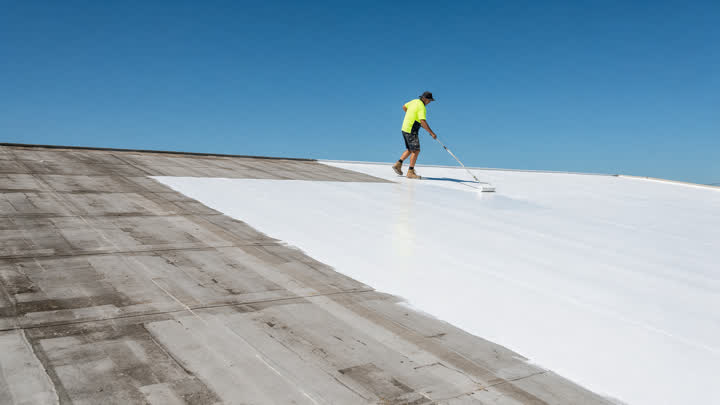
Silicone restoration coating
$3.50 – $7
10–20 yrs
Only over a sound, dry substrate. Renewable warranty at end of term.
Metal retrofit / recover
$12 – $25
30–40 yrs
Wide range — standing seam over purlins vs. coating an existing panel roof.
How to read these. Ranges are DMV market pricing for planning and budgeting, not a quote. Real numbers move with deck condition, insulation required to hit code, access and staging, how much rooftop mechanical equipment has to be lifted and reset, and whether the work is phased around tenants.
Investigation, maintenance and the things that get discovered
Item
Typical range
Notes
Leak investigation and repair
$500 – $5,000
Most single-source leaks land in the low four figures. Chronic leaks need a survey, not a patch.
Infrared or moisture survey
$0.05 – $0.15 / sq ft
Maps wet insulation so you replace only the saturated area instead of the whole field.
Preventive maintenance program
$0.08 – $0.20 / sq ft / yr
Two inspections a year plus minor repairs. Usually required to keep an NDL warranty alive.
Tapered insulation for drainage
$2 – $5 / sq ft (added)
Where ponding has to be corrected rather than lived with.
Deck replacement
$6 – $14 / sq ft (added)
Only discovered once the old roof is off. Should be a unit price in your contract, not a change order fight.
How to read these. Ranges are DMV market pricing for planning and budgeting, not a quote. Real numbers move with deck condition, insulation required to hit code, access and staging, how much rooftop mechanical equipment has to be lifted and reset, and whether the work is phased around tenants.
Important things to know in Loudoun County, Virginia
On mission-critical facilities, specify redundancy and leak detection. The cost of a membrane upgrade is trivial against the cost of one water event over live equipment.
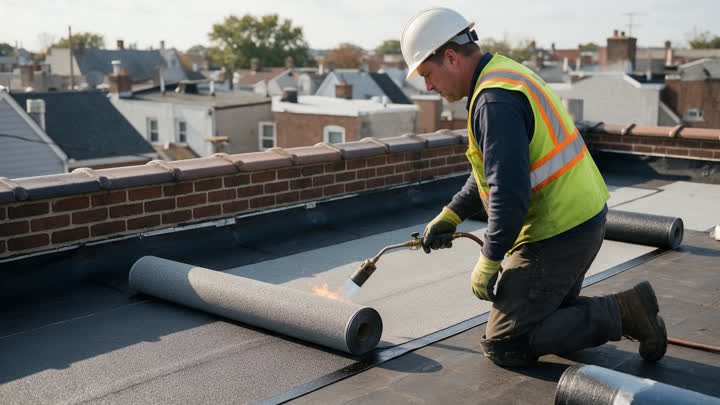
No hot work. Torch application has no place on these buildings, and self-adhered or cold-adhered systems get you the same assembly safely.
Confirm town versus county jurisdiction before applying for a permit in Leesburg, Purcellville or Middleburg.
Loudoun's newer buildings are large enough that phased replacement over multiple budget years is genuinely viable. A prioritised survey makes that plan real.
And everywhere in the DMV
Get the permit in the contractor's name. If a roofer asks you to pull it as the owner, they are moving liability onto you.
Ask for the unit price on wet insulation and deck replacement before the contract is signed. Those are the two things nobody can see until the roof is open, and they are where an honest job and a bad one diverge.
A manufacturer NDL warranty is issued to the building, not to the contractor — but it usually requires a certified installer and documented maintenance. Confirm both before you rely on it.
Photograph the roof before work starts, including the mechanical equipment. It settles most disputes about who damaged what.
Questions we get
Can roofing be done over a live data centre?
Yes, and it is done routinely — but it is a different discipline. No hot work, dried-in at every stopping point, documented control over every penetration, coordination with facilities on equipment that cannot be shut down, and generally added redundancy over critical space.
Who issues commercial roofing permits in Loudoun County?
Loudoun County Building and Development, under the 2021 Virginia Uniform Statewide Building Code. Incorporated towns including Leesburg may issue their own permits, so confirm which applies to your property.
What roof system is right for a mission-critical facility?
Usually a redundant assembly with maximum puncture resistance — thicker membrane or a two-ply system — plus walk pads on every service route and often a leak-detection layer. The specification follows the consequence of failure, not the square-foot price.
What does commercial roofing cost in Loudoun County?
Standard commercial work runs roughly $9 to $17 per square foot. Mission-critical facilities run well above that because of redundancy, restricted methods, phasing around continuous operation and monitoring — and the premium is straightforwardly justified by what is underneath.
Pick a time that suits you. We'll talk through the building, walk the roof, and send you a written condition report with photos and budget ranges for repair, restoration and replacement.
 VA
VA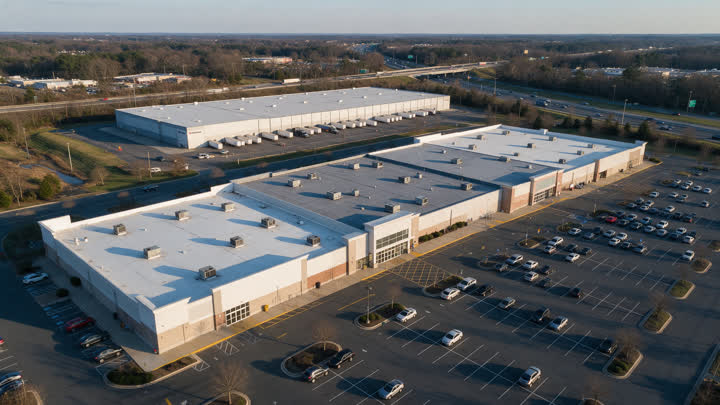 VA
VA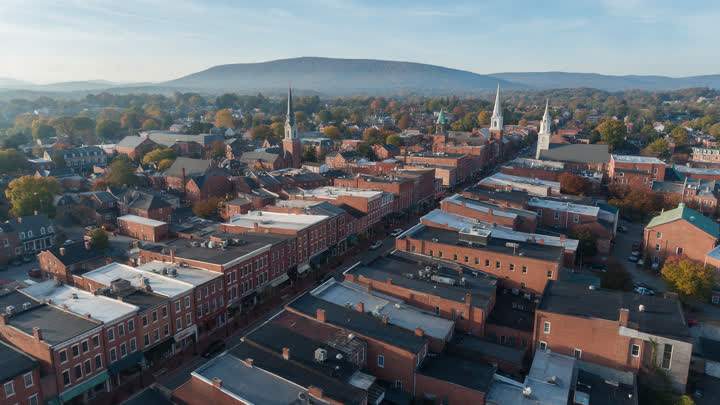 MD
MD VA
VA