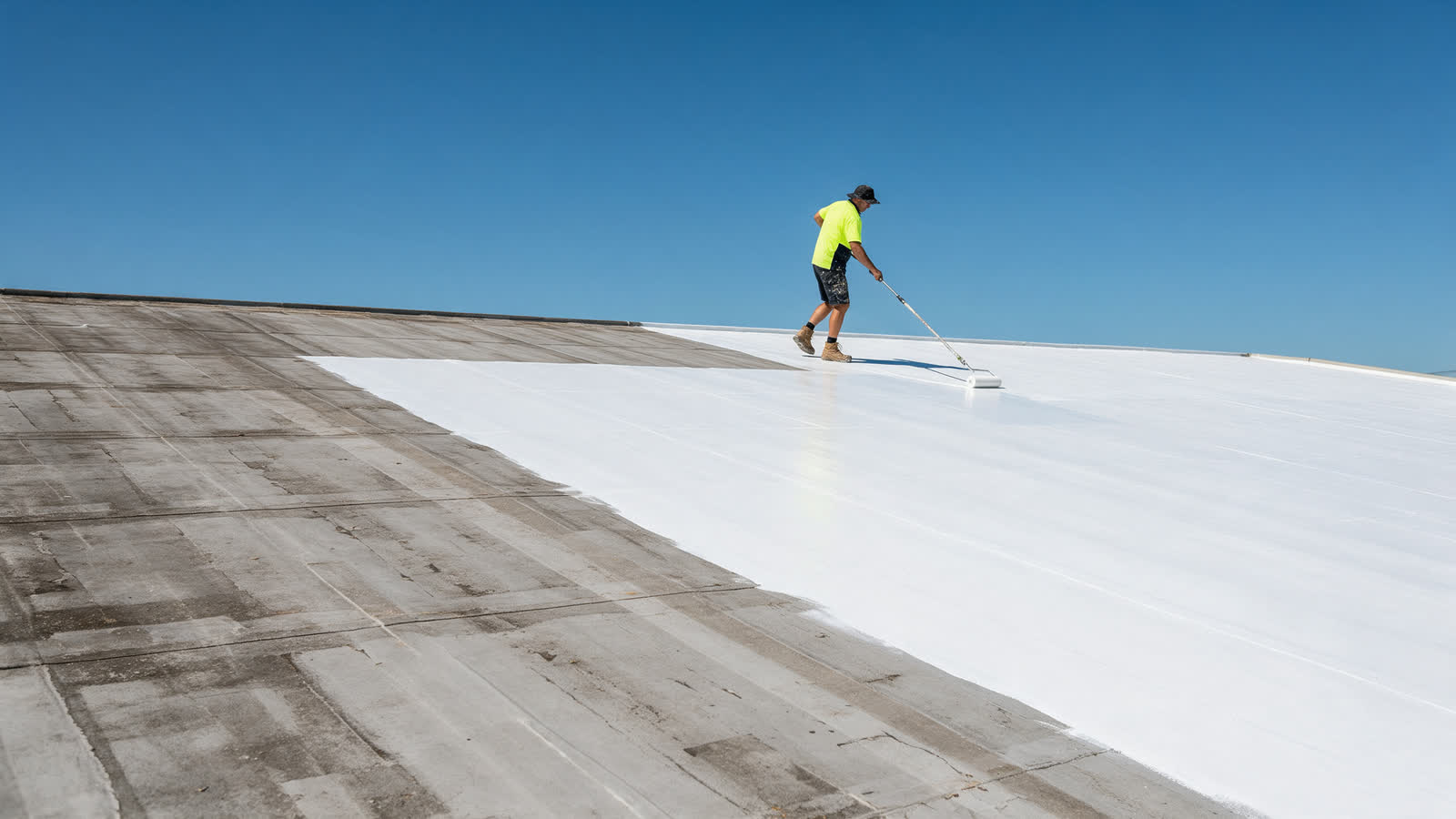
A restoration system is a fluid-applied membrane — usually silicone or acrylic — installed over an existing roof after repair and preparation. Done on the right roof, it is genuinely excellent value: no tear-off, no landfill, minimal disruption, and a renewable warranty.
Done on the wrong roof, it seals moisture into the assembly and buys you a worse problem. We would rather tell you no than sell you one.
A coating restores a surface. It does not fix what is underneath. So the only question that matters is whether the insulation and deck below the existing membrane are dry and sound.
That is answered by a moisture survey — infrared, nuclear or capacitance — plus core cuts to verify. Any wet areas found have to be cut out and replaced before coating. If the survey shows widespread saturation, coating is off the table and anyone still offering it is selling you something.
A coating job that is only coating is a paint job. A real restoration is mostly repair work with a coating at the end.
| System | Installed cost / sq ft | Typical service life | Notes |
|---|---|---|---|
| Silicone restoration coating | $3.50 – $7 | 10–20 yrs | Only over a sound, dry substrate. Renewable warranty at end of term. |
How to read these. Ranges are DMV market pricing for planning and budgeting, not a quote. Real numbers move with deck condition, insulation required to hit code, access and staging, how much rooftop mechanical equipment has to be lifted and reset, and whether the work is phased around tenants.
The requirements below apply throughout the DMV. Jurisdiction specifics are on each service area page.
That often means a simpler permit path and, importantly, no trigger to bring insulation up to current energy code. It is a legitimate advantage — and also why some contractors push coatings onto roofs that should be replaced.
The coated assembly needs to hold its classification. Manufacturers publish listings for coating over specific substrates; the submittal should name yours.
Silicone tolerates standing water; it does not remove it. If ponding is a code-level drainage deficiency, coating over it leaves the deficiency in place.
The rule that decides most jobs: IBC §1511 prohibits a roof recover where the existing roof already has two or more applications of any roof covering. It also prohibits recovering when the existing roof is water-soaked or has deteriorated to the point that it is no longer an adequate base. In either case the code requires removal down to the deck. This is the single most common place a cheap bid quietly goes non-compliant.
Ten to twenty years depending on system, mil thickness and substrate, and most manufacturers offer a renewable warranty — a re-coat at term extends coverage rather than starting over.
Substantially — typically a third to a half of replacement cost, and it usually avoids triggering the energy code insulation upgrade. That is exactly why it needs an honest substrate assessment first.
Silicone tolerates ponding where acrylic does not, so it can be coated. But ponding usually signals a drainage problem worth correcting rather than sealing over — the report will tell you whether it is cosmetic or structural.
A 30-minute consultation, then a written report with photos and numbers. No obligation.
Pick a time that suits you. We'll talk through the building, walk the roof, and send you a written condition report with photos and budget ranges for repair, restoration and replacement.
Opens our live calendar. Pick a time — there is no form to fill in.
Active leak? Don't book — call 202-798-7663. We triage leaks ahead of scheduled visits.