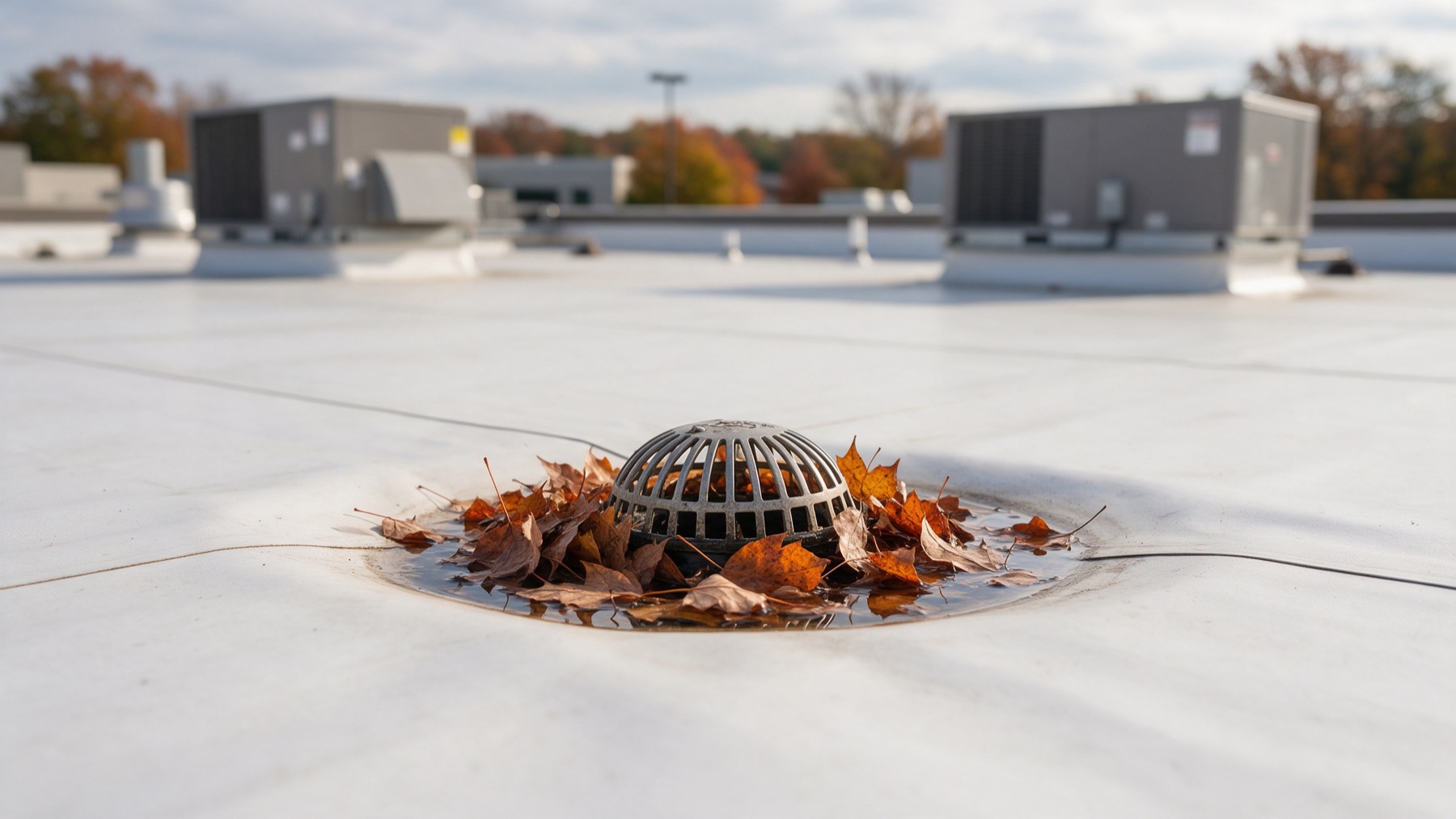
Most commercial roof leaks that show up in January were set up in October. Leaves block a drain, water stands where it shouldn't, a freeze opens a seam that was only tired — and the first anyone hears of it is a ceiling tile in a tenant's office.
The good news is that the work that prevents most of it isn't roofing. It is housekeeping, done by your own facility team, on a schedule. This commercial roof maintenance checklist covers what in-house staff can do safely, how to make it repeatable, and exactly where it stops being their job.
Industry guidance, including the National Roofing Contractors Association's, is to look at a low-slope roof at least twice a year — spring and fall — and again after any severe storm. Fall is the one that matters most in the DMV, because it is the last look before freeze-thaw season.
Before anyone goes up: the edge rules
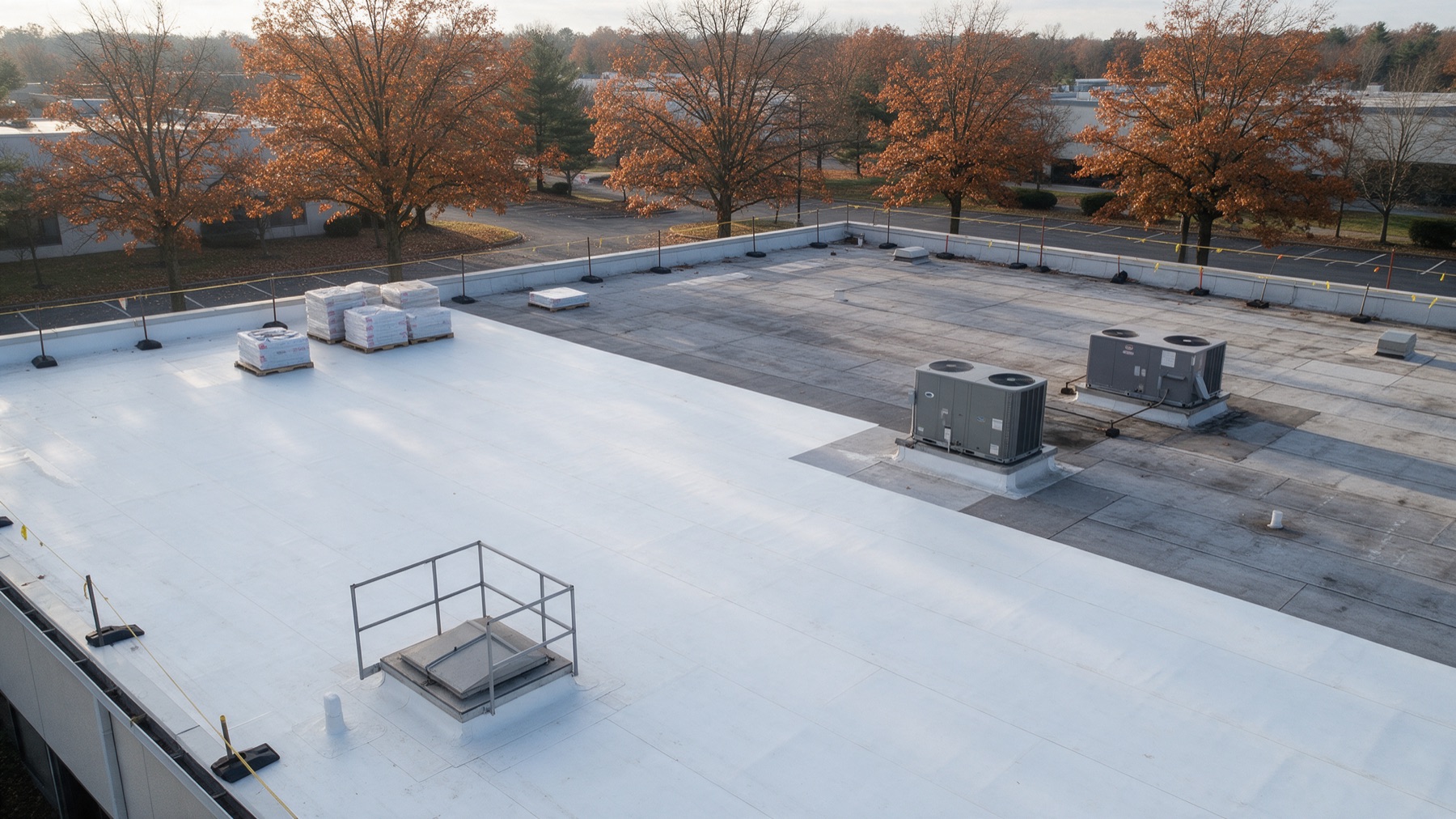
This is the part that gets skipped, and it is the part with legal teeth. If your employees go onto the roof, OSHA's general-industry walking-working surfaces rules apply. A low-slope roof is anything at or under a 4-in-12 pitch, which covers essentially every commercial flat roof.
The short version of 29 CFR 1910.28(b)(13):
Two more rules catch facility teams out:
- Skylights count as holes. Anyone working near one needs it covered, guarded, or to be tied off. People step back to look at a drain and go through a skylight. It happens every year.
- The 4-foot rule is general. Any unprotected side or edge 4 feet or more above a lower level requires fall protection — that includes the edge of a lower roof, a mechanical well, or an open roof hatch.
Practical policy that keeps you compliant for a routine walk: stay 15 feet or more from every edge unless someone is properly protected, never go up alone, go up in daylight on a dry, calm day, and close the hatch behind you. Have your safety officer confirm this against your own written program — it is the basis for a policy, not a substitute for one.
If a check on this list requires standing near an edge, it is not a facility-team check. Photograph it from 15 feet back and put it on the roofer's list.
The checklist
Do these in order, every fall, from the same route across the roof.
On ponding, the 48-hour test matters. NRCA treats water that remains more than 48 hours after rain, in conditions that allow drying as ponding, and that distinction is what manufacturers and consultants use. A puddle the morning after a storm is normal. The same puddle on day three is a problem worth writing down.
Tricks that make it work
The value isn't in walking the roof once. It is in walking it the same way every time, so changes stand out.
Photograph the same spots from the same place. Pick ten fixed points — each drain, each corner of a big unit, the worst seam. Shoot them from the same position every visit. In a year you have a record that shows a seam opening slowly, which a single photo never will.
Mark the drains on a roof plan. A one-page sketch with every drain, scupper and hatch numbered turns "check the drains" into a list someone can finish. Tape a copy inside the roof hatch.
Keep a roof access log at the hatch. Who went up, when, and why. Most single-ply damage on occupied buildings comes from trade traffic — HVAC techs, cable installers, sign contractors — and the log is how you find out who dropped the screw that punctured your roof.
Make other trades report out. Put it in your service contracts: anyone working on the roof photographs the area before and after and reports damage they see. It costs nothing and catches problems while they are small.
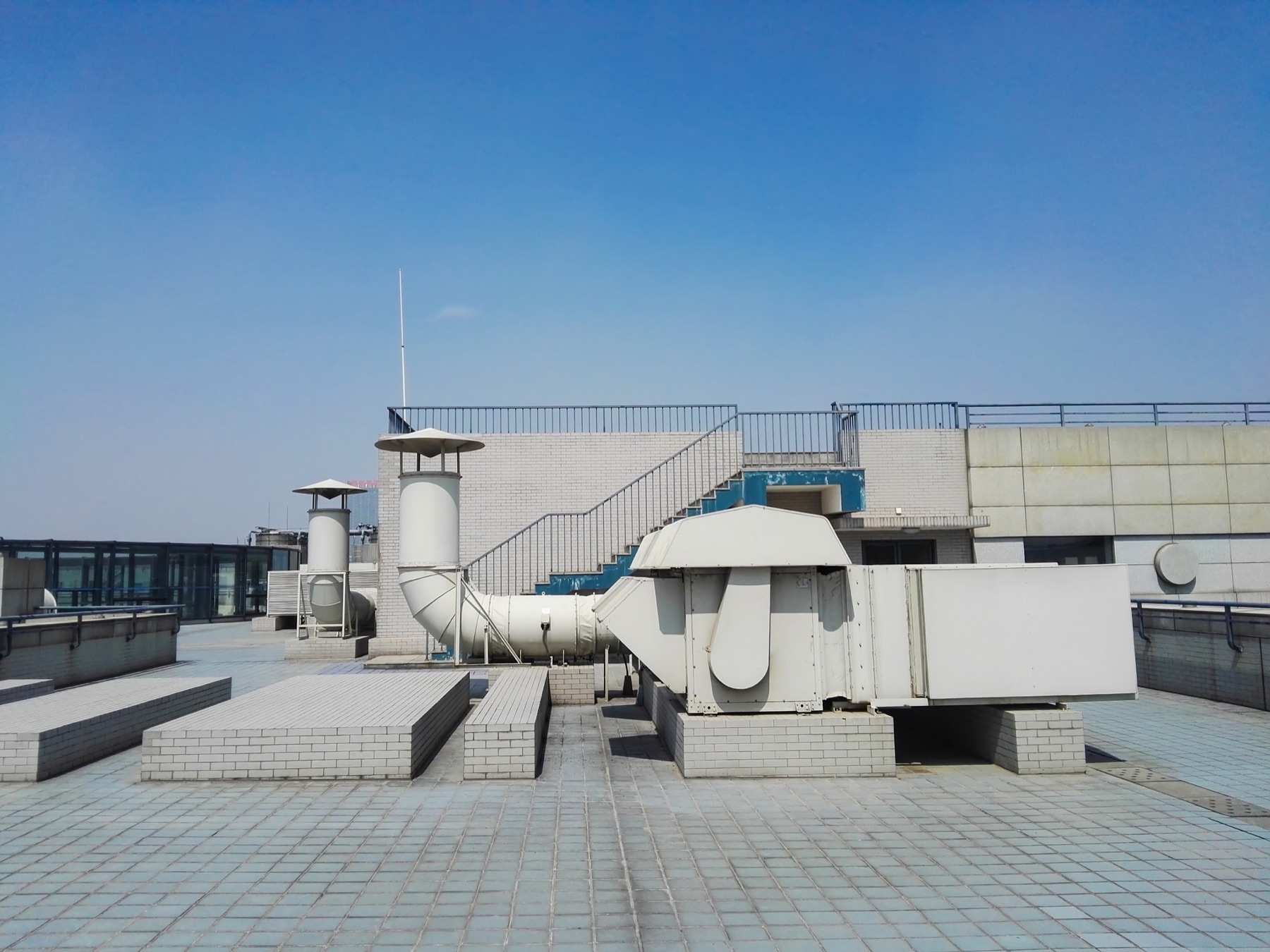
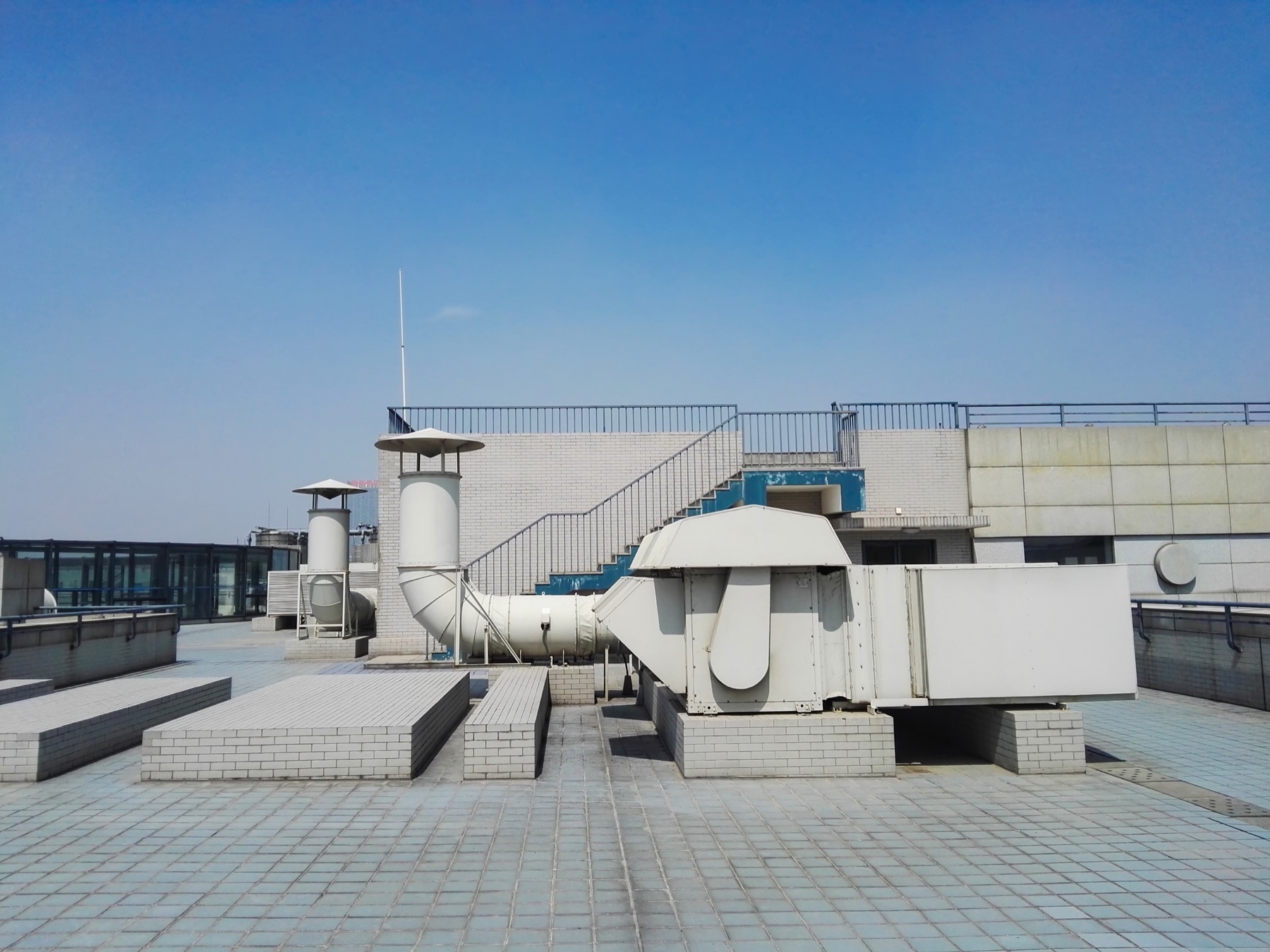
Put walkway pads on the routes people actually use. The worn path from the hatch to the units is where membranes fail first. Pads are cheap and are the right fix — not a reason to keep walking on bare membrane.
Keep the paperwork. Many manufacturer warranties require documented maintenance, and a claim can be denied without it. Your checklist, dated photos and access log are that record. We wrote more on what warranty terms really cover when comparing bids.
What not to do yourself
These are the DIY moves that turn a small repair into a big one.
- Don't patch. Asphalt-based roof cement and many off-the-shelf sealants are not compatible with TPO, PVC or EPDM, and an unauthorised repair can put a manufacturer warranty at risk. Check your warranty terms before anyone touches the membrane.
- Don't probe or cut. If something looks wrong, photograph it. Opening a blister or cutting into a wet spot lets water into the insulation.
- Don't pressure-wash. It drives water under laps and seams.
- Don't walk a wet, frosty or snowy roof. Single-ply membranes get slick, and you can't see what you are stepping on.
- Don't clear snow with metal tools when winter comes. That is a separate plan, and a roofer should help you write it.
When it becomes a roofer's job
Your team's job ends at observation and housekeeping. Call a roofer when any item in the right-hand column of the table turns up, when a leak appears inside, or when the same problem shows up on two visits in a row. Recurring issues are the signal that a maintenance program — scheduled professional inspections with minor repairs included — costs less than reacting.
If you find active water coming in, that is leak repair, not a booking.
FAQ
How often should a facility team check a commercial flat roof?
At least twice a year, spring and fall, and after any severe storm. Buildings with heavy tree cover around them benefit from an extra check in late November once the leaves are down.
Can maintenance staff legally go on the roof?
Yes, if your employer follows OSHA's fall protection rules for low-slope roofs: protection within 6 feet of the edge, and either protection or a designated area and an enforced 15-foot work rule beyond that. Skylights must be covered or guarded. Confirm your policy with your safety officer.
How long can water stand on a flat roof before it's a problem?
The industry benchmark is 48 hours after rain stops, in conditions that allow drying. Water that is still there on the third day should be reported and looked at.
Will cleaning drains void our roof warranty?
No — clearing debris is normal maintenance and is usually exactly what a warranty expects. What can cause problems is unauthorised repair work on the membrane itself. Read the maintenance section of your warranty.
If your team's checklist turns up something you want a second opinion on, book a free 30-minute consultation or call 202-798-7663. We will tell you whether it needs a roofer at all.
Header image: AI-generated illustration (Magnific).