Most commercial roofs do not fail where the weather is worst. They fail along the route a technician walks every month from the hatch to the rooftop units. Commercial roof walkway pads are the cheapest piece of protection on the roof, and they are one of the few that a facility team can specify, audit and enforce without ever setting foot on the membrane.
This post covers where manufacturers say walkway pads belong, how to check whether your roof has them from safe positions, and where the work becomes a roofer's job.
Why a walkway pad matters on a flat roof
A low-slope membrane is a waterproofing layer, not a floor. Repeated foot traffic grinds grit into the surface, tools and parts get dropped, and the same few feet of membrane take every footstep for years. A walkway pad gives that traffic a sacrificial, textured surface so the roof beneath is not the thing wearing out.
The pad does not make the roof safe to walk on. Fall protection, edge distances and skylight guarding are separate questions. Read the OSHA low-slope rules before anyone is sent up, and use our fall maintenance checklist for the full table.
Where manufacturers say walkway pads go
Specs differ by system and brand, so your own manufacturer's current document governs. Two published sources show how consistent the guidance is.
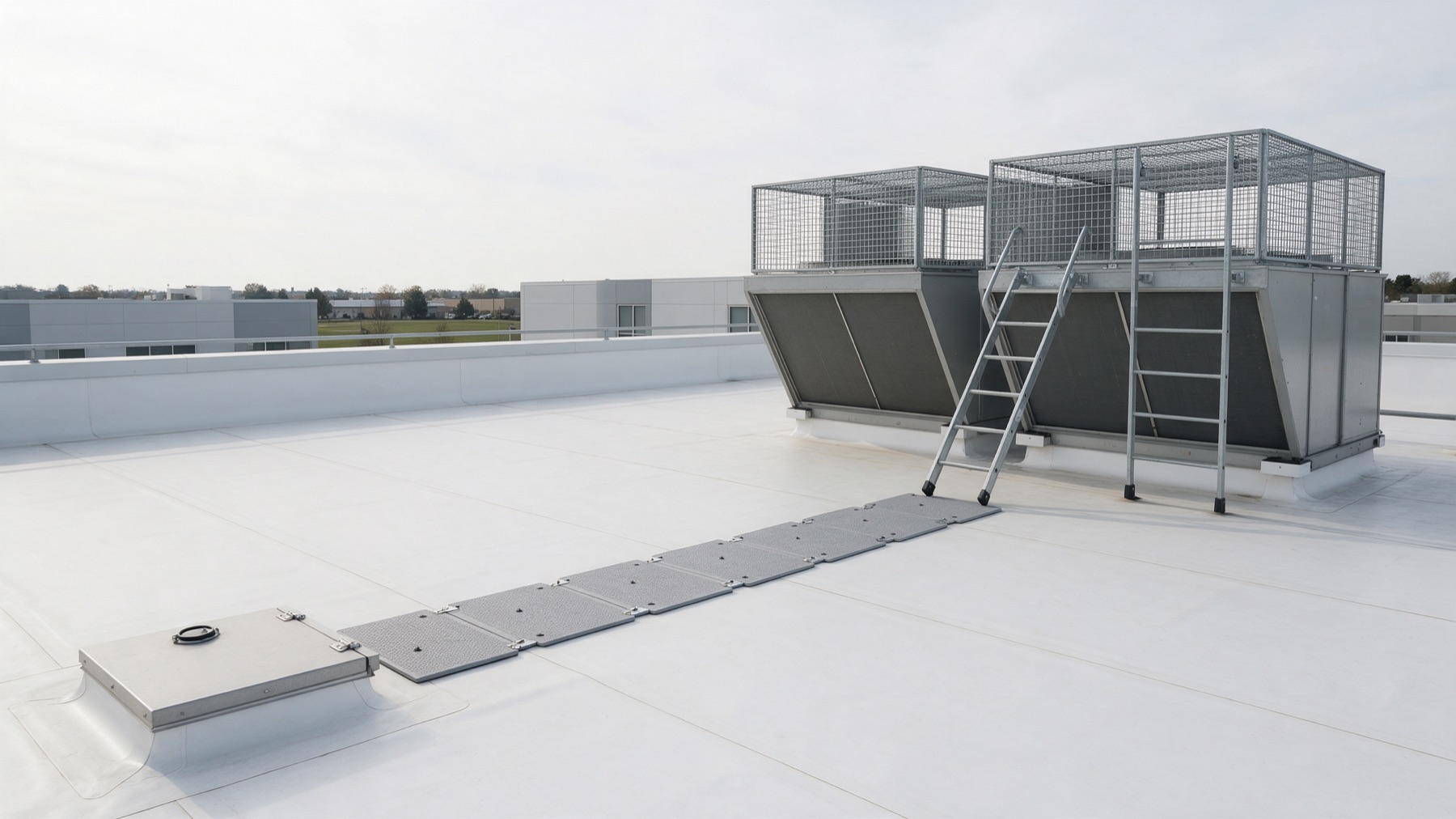
Versico's technical bulletin for heat-weldable walkway rolls says walkways must be installed at all traffic concentration points, such as roof hatches, access doors and rooftop ladders, regardless of traffic frequency. It also says they must be installed where regular maintenance, once a month or more, is needed to service rooftop equipment (Versico).
GenFlex's TPO walkway pad data sheet (October 2025) recommends pads at all access points, as a walkway system on roofs with traffic more often than once a month, and around rooftop equipment that needs periodic maintenance (GenFlex).
What a good installation looks like
You cannot judge workmanship from the ground, but you can ask the right questions of whoever installs or inspects the pads. GenFlex's data sheet, for TPO systems, says to install pad in sections about 10 feet long with a space between them for drainage, lay it out so it does not cause ponding, and avoid placing it over membrane seams. It also notes the surface must be clean and dry, and that welding temperature affects the finish.
That matches the common-sense test. Pads that dam water, cover a seam nobody can then inspect, or stop short of the equipment they were meant to serve are not doing their job. Other systems, including EPDM and modified bitumen, use different pad materials and attachment methods, so ask the installer for the manufacturer's detail for your roof rather than assuming a TPO detail applies.
How to audit your pads without going on the roof
Use the same safe positions as the photo program in our post on the commercial roof photo log: upper-floor windows, a guarded hatch landing, ground views where a lower roof is visible, and the interior.
- Look at the hatch landing first. If the hatch is guarded and policy allows, photograph what is visible from the opening without stepping out. A bare membrane at the exit is the clearest sign of missing protection.
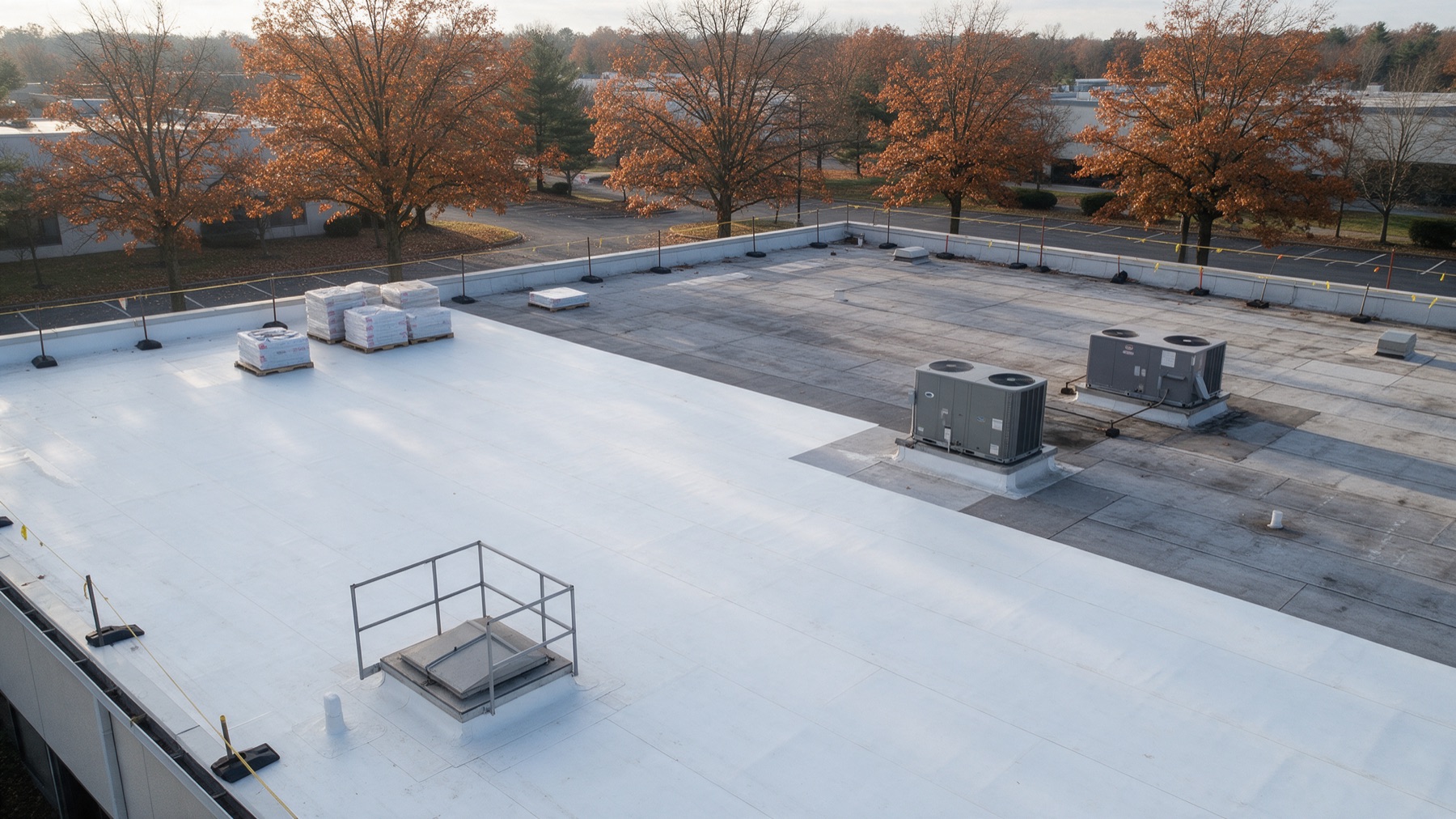
- Check any visible lower roof from a window. Look for a worn, darker or scuffed path running between the access point and the units.
- Read the contractor sign-in log. If service visits happen monthly or more, the path should exist. Our rooftop HVAC access policy explains how to set up that log.
- Compare photos year over year. Debris, curling pad edges or fresh scuffing beside a pad suggest people are leaving the route.
- Check your warranty file. Some manufacturer warranties address foot traffic and walkway protection. Read your own document and do not assume.
Planning ranges, not quotes
Pad installation is small compared with membrane repair or replacement, but the cost depends on the system, access, roof size and how many pads are needed. As a rough DMV planning exercise, treat adding pads as a minor line item in a maintenance visit, and ask for it itemized in any bid. A roofer's written scope will give the real figure.
When it becomes a roofer's job
Pads, like all membrane-attached products, are roofing work. Call a roofer when:
- You find no pads at the access point or along a regular service route.
- Pads are lifting at the edges, curling, or leaving open gaps in the weld or adhesive.
- Pads sit across a seam, hold water, or have trapped debris underneath.
- You can see membrane wear, cuts or exposed reinforcement along a path.
- A new unit has been added, or service patterns have changed, and the path needs to be redrawn.
Your team should not stick, weld, cut or reposition pads themselves. That means no adhesives, no heat tools and no trimming on the membrane. Anything involving the rooftop electrical, gas or HVAC equipment itself goes to the licensed trades, and nobody should be sent onto a wet, frosty, snowy or windy roof. If pads are missing and you want the right fix scoped, our roof maintenance programs and commercial roof repair pages describe how that work is handled.
FAQ
Do I really need walkway pads to every rooftop unit?
Manufacturers such as Versico say yes for equipment serviced once a month or more, and GenFlex recommends them around equipment that needs periodic maintenance. If a unit is rarely visited, a pad at the access point still matters. Check your warranty.
Can my maintenance staff install walkway pads themselves?
No. Pads are bonded or welded to the membrane, which is roofing work, and a poor attachment can create a leak path or complicate a warranty. Have a roofer install them, ideally the original installer if the roof is under warranty.
Are walkway pads the same as pavers?
No. Pavers are separate loose or pedestal units used on some roofs; the GenFlex sheet mentions pavers as an acceptable alternative where traffic is necessary. Which one suits your roof depends on the system and load limits, so ask your roofer.
How do I know if the worn path on my roof is a problem?
If you can see scuffing, thinning or exposed reinforcement from a safe vantage, treat it as a repair question rather than a housekeeping one. Photograph it, add it to the log, and book a roofer.
Do walkway pads make the roof safe to walk on?
No. They protect the membrane. Fall protection near edges and around skylights is governed by OSHA 1910.28, and your staff should stay away from roof edges altogether.
Next step
If your roof has no pads at the hatch or the equipment path, a short written condition report will tell you what to add and where. Book a free 30-minute consultation at https://dmvcommercialroofing.com/#book or call 202-798-7663.
Header image: AI-generated illustration (Magnific).