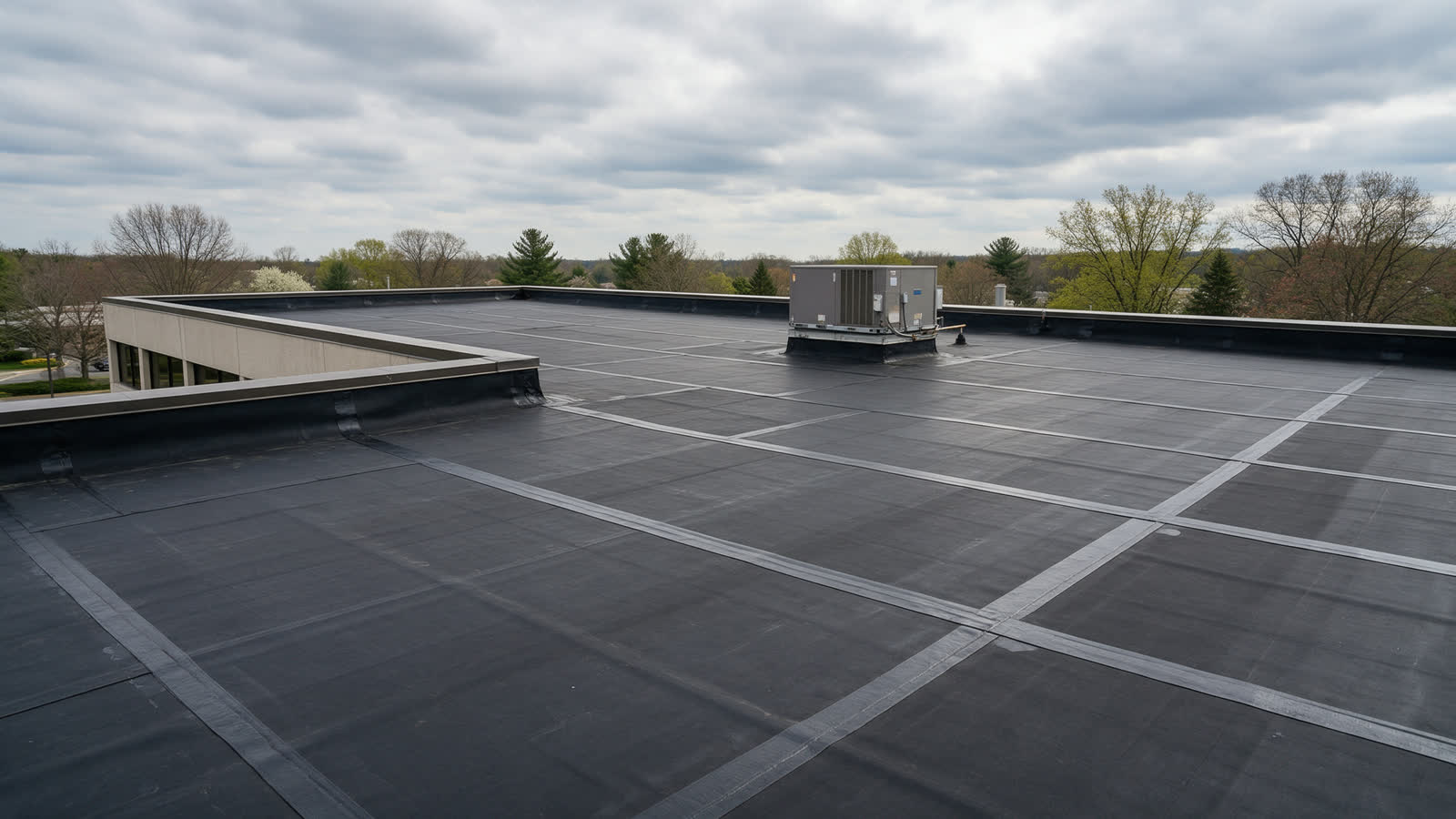
EPDM is a synthetic rubber membrane that has been on American commercial roofs since the 1960s. That matters: when someone claims a system lasts thirty years, EPDM is one of the few where there are thirty-year-old roofs to point at.
It comes in very wide sheets, which means far fewer seams than a single-ply alternative — and seams are where roofs leak.
Black EPDM absorbs solar heat. On a building with heavy summer cooling load and rooftop units already working hard, that is a genuine operating cost, and the reason many DMV owners moved to reflective membranes.
There are answers: white EPDM is available, and ballasted assemblies moderate surface temperature. But if lowering cooling load is a priority, a reflective TPO or PVC roof is the more direct route.
Modern EPDM uses factory-applied seam tape rather than the field-applied adhesives that gave older systems their reputation. Prepared and rolled properly, taped seams perform. Prepared badly, they are still the first thing to fail.
On an existing EPDM roof, the condition report concentrates on seam laps, pipe boots, and the termination bar at parapets — those three account for most of what we find.
| System | Installed cost / sq ft | Typical service life | Notes |
|---|---|---|---|
| EPDM, mechanically attached | $8.50 – $15 | 20–30 yrs | Proven on older stock. Black absorbs heat; ballast or white options exist. |
| EPDM, fully adhered | $10.50 – $18 | 25–30 yrs | Cleaner detailing around heavy penetration counts. |
How to read these. Ranges are DMV market pricing for planning and budgeting, not a quote. Real numbers move with deck condition, insulation required to hit code, access and staging, how much rooftop mechanical equipment has to be lifted and reset, and whether the work is phased around tenants.
The requirements below apply throughout the DMV. Jurisdiction specifics are on each service area page.
A ballasted EPDM roof puts real weight on the structure. On an existing building that usually means a structural check before the permit issues.
Ballast is a wind design element, not just weight — stone size and distribution are specified, and it changes at perimeters and corners like any other attachment.
IBC §1511 applies identically: two existing layers or wet insulation means tear-off, whatever membrane goes on next.
The rule that decides most jobs: IBC §1511 prohibits a roof recover where the existing roof already has two or more applications of any roof covering. It also prohibits recovering when the existing roof is water-soaked or has deteriorated to the point that it is no longer an adequate base. In either case the code requires removal down to the deck. This is the single most common place a cheap bid quietly goes non-compliant.
Twenty to thirty years is a realistic expectation for a properly installed adhered or mechanically attached EPDM roof in this climate, with seam and boot maintenance along the way.
It raises rooftop surface temperature and adds cooling load compared with a reflective membrane. Whether that outweighs the lower first cost depends on your HVAC situation — it is worth actually running the numbers rather than assuming either way.
It repairs well. Cleanly prepared patches on EPDM bond reliably, which is one reason it stays serviceable so long. The question is always whether you are repairing an isolated defect or chasing a systemic one.
A 30-minute consultation, then a written report with photos and numbers. No obligation.
Pick a time that suits you. We'll talk through the building, walk the roof, and send you a written condition report with photos and budget ranges for repair, restoration and replacement.
Opens our live calendar. Pick a time — there is no form to fill in.
Active leak? Don't book — call 202-798-7663. We triage leaks ahead of scheduled visits.