A rooftop unit condensate leak rarely looks like a roof problem at first. The ceiling tile under the unit stains in August, after a week without rain. The roofer finds nothing wrong with the membrane. Then the stain comes back the next summer. A cooling coil produces water every hour it runs, and on a DMV summer day that is most of the day. If the drain line is cracked, blocked or disconnected, the water goes onto the membrane, around the curb or into the building.
Late October is the right time to deal with it. The cooling season has just ended, the heating changeover brings the HVAC contractor back to the roof, and you can still remember which tiles stained in July. This post covers what your facility team can check without going near an edge or touching the roof. It also covers what the mechanical code expects of the equipment, and where the job passes to the HVAC contractor and the roofer.
Why condensate is a roof problem
Every air conditioning or heat pump coil pulls moisture out of the air, and the drain pan under it collects that water. The condensate line then has to carry it somewhere approved. When it does not, the damage is slow and in one place.
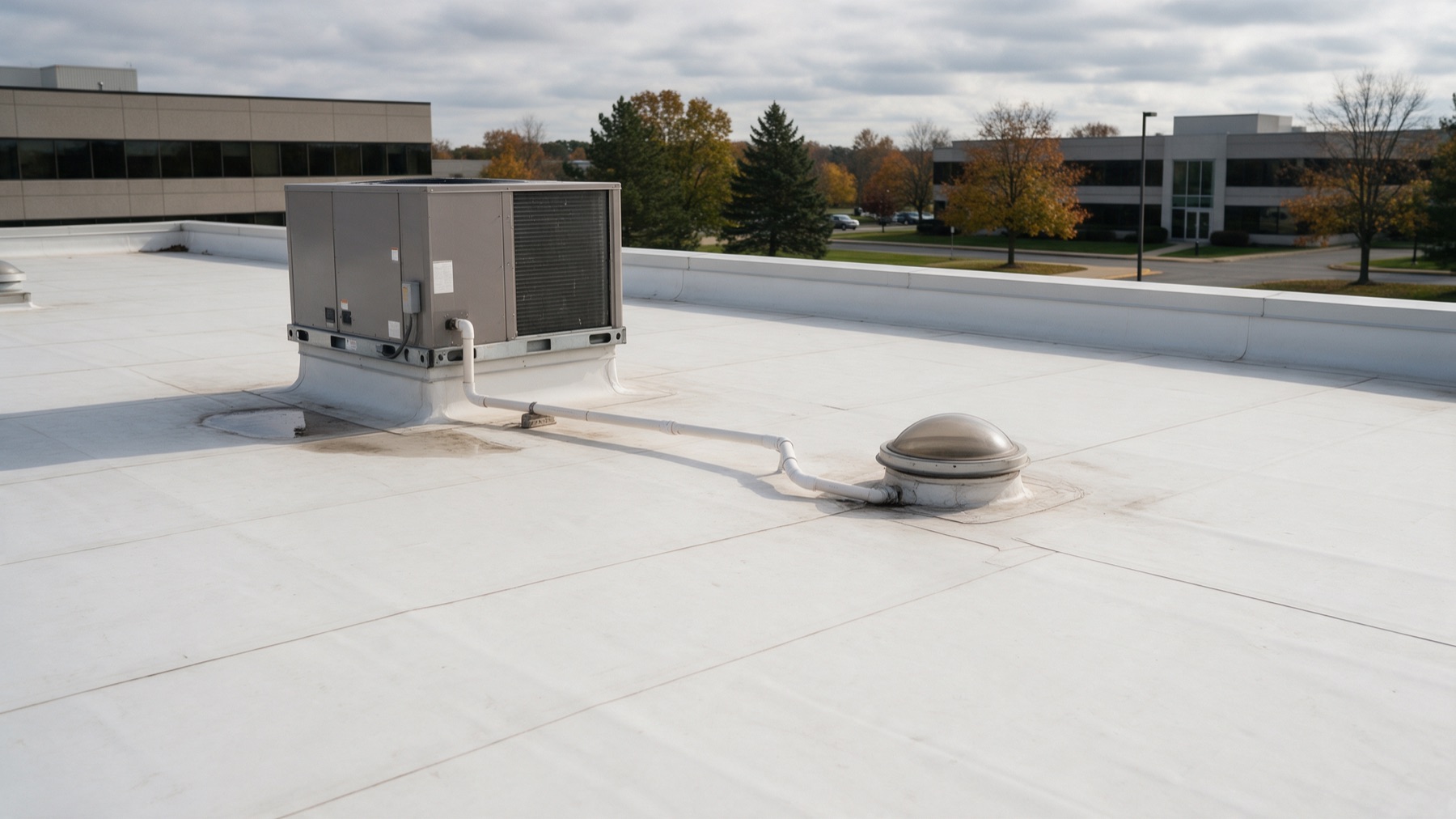
Forensic engineers at Rimkus describe the mechanism. When a unit discharges condensate onto the roof surface instead of into a drain, the same spot stays wet for long periods. That moisture can work into the membrane and the materials beneath it, and condensate is mildly acidic, which may add to the wear (Rimkus). Rimkus also lists condensate drainage first among the ways rooftop HVAC units damage roofs, alongside vibration, foot traffic and flashing at the curb (Rimkus). Their recommendation is to route condensate to a proper drain, which removes the source before it becomes a problem.
The practical problem for a facility team is diagnosis. A condensate leak and a roof leak can look the same from the ceiling. One is the HVAC contractor's job and the other is the roofer's, and they will each tell you it is the other's until someone shows the pattern.
What the mechanical code asks of the equipment
DC, Maryland and Virginia all build on the International Mechanical Code, with local amendments and their own adopted editions. Section 307 of the 2021 IMC sets the condensate rules, quoted here from the Maryland adoption on UpCodes (IMC 2021 §307). Check the edition and amendments your jurisdiction actually enforces with the local code official.
The code does not say where the "approved place of disposal" is on your roof. That is the local authority's decision, and practice varies between jurisdictions. Ask your mechanical contractor what was approved for your building, and get it in writing.
What your team can check without going on the roof
All of this is done from inside the building, from the roof hatch landing with the hatch open and nobody stepping out, or from a window that overlooks the roof. Nobody walks the roof for this. Anyone who does go onto a low-slope roof is covered by OSHA's rules in 29 CFR 1910.28(b)(13): fall protection within 6 feet of an edge, and protection, a designated area or an enforced work rule farther back. Skylights count as holes. The full table is in our fall roof maintenance checklist. Don't open the hatch in wet, frosty, snowy or windy weather.
1. Map the stains against the units
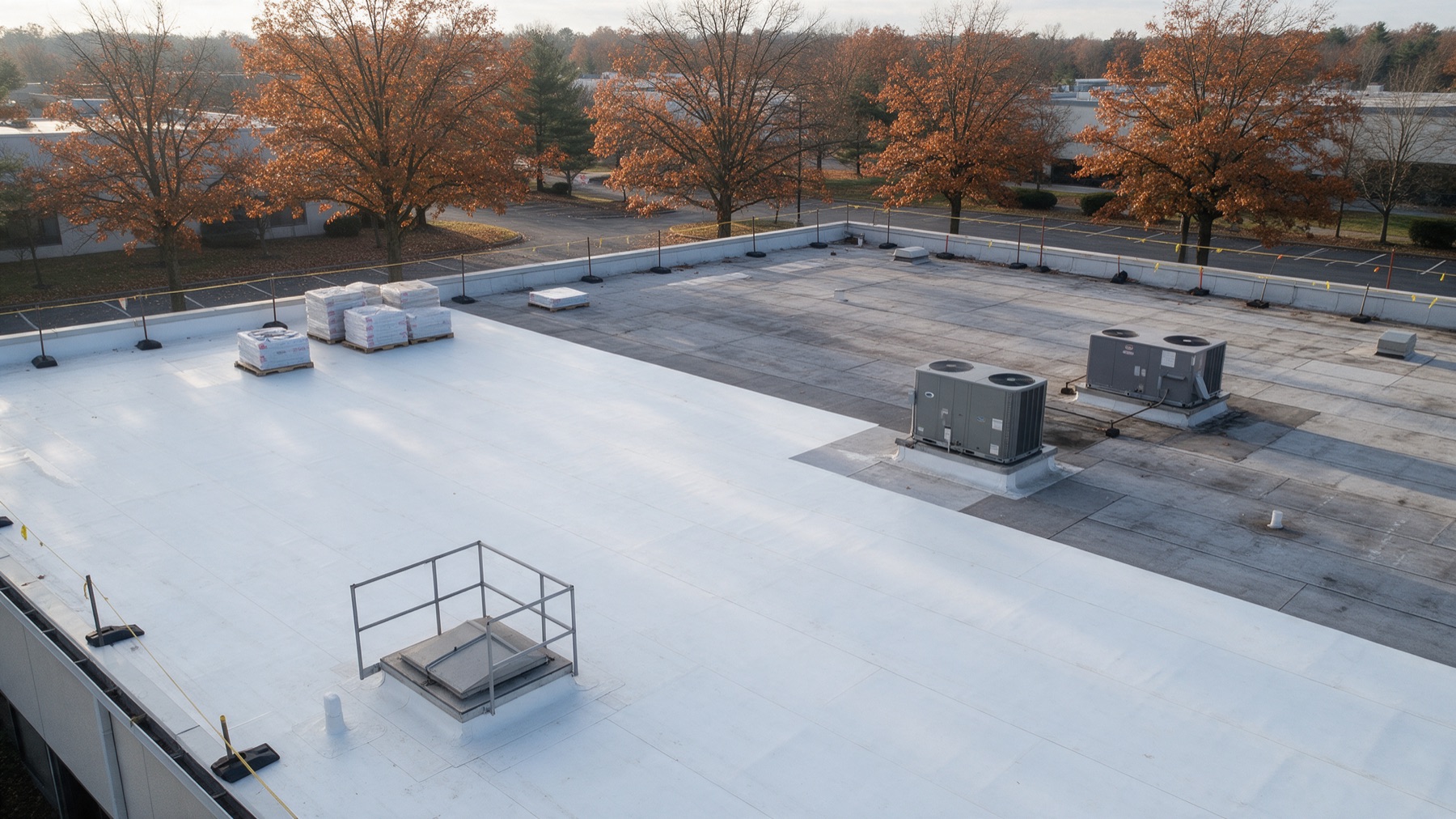
Take the roof plan or a site aerial and mark every rooftop unit. On the floor plan below, mark every ceiling stain, replaced tile and drip report from the last year, with dates. A stain directly under or beside a unit's curb is the first clue.
2. Compare the dates with the weather
This is the most useful thing a facility team can do, and it costs nothing. A roof leak follows rain. A condensate leak follows cooling load: hot, humid days and long run hours, often with no rain at all. If your drip reports cluster in dry spells in July and August, tell both contractors before they arrive.
3. Look at the lines from a safe viewpoint
From the hatch landing or a window, with a phone camera zoomed in, look for:
- A drain line that ends loose on the membrane rather than at a drain or an approved disposal point
- Lines lying on the membrane with no support, or visibly sagging
- A dark, discoloured or green patch on the membrane near a unit
- Standing water, algae or debris build-up around a curb on a dry day
- Water coming from a secondary drain outlet
Photograph each one with the date and add it to your roof photo log.
4. Check the shut-off history
Ask your building automation operator or HVAC contractor for any unit that has tripped on a condensate or float switch. Repeated trips in humid weather point to a drain that is blocking up.
5. Watch the contractor visits
The access log from your contractor roof access policy matters here. Stains that start soon after a service visit or a unit replacement suggest a line was disconnected or rerouted.
What your team should not do
- Don't touch, cut, reroute or clear condensate lines. That is mechanical work for a licensed HVAC contractor.
- Don't open unit panels or reset safety switches. Electrical and HVAC work goes to licensed trades.
- Don't patch, seal, scrub or pressure-wash the wet patch on the membrane. Observation only.
- Don't apply chemicals to algae on the roof. Some cleaners are not compatible with every membrane, so ask the roofer.
When it becomes the HVAC contractor's job, and when it becomes a roofer's job
Most condensate problems need both trades. The table shows the usual split.
The order matters. A membrane repair under a unit that is still dripping on it is money spent twice. Get the water source fixed, then have the roof looked at. If water has been reaching the insulation for a season or more, a moisture survey may be worth the cost before anyone talks about patches or coatings.
Our roof repair and maintenance programme pages describe how we handle this kind of work, including notes for the HVAC contractor on what to fix first.
Frequently asked questions
Why does my ceiling leak when it hasn't rained?
On a top floor under rooftop equipment, the usual suspects are condensate from a cooling coil, a plumbing line, or condensation inside the building. Log the dates against the weather and the HVAC run hours, and have an HVAC contractor check the condensate drain before a roofer opens the membrane.
Is it OK for rooftop AC condensate to drain onto the roof?
The 2021 IMC requires condensate to go to an approved place of disposal, and it must not cause a nuisance. Where that is on your roof is the local code official's decision. A line dripping onto the same patch of membrane keeps it wet, and forensic engineers link that to membrane wear. Route it to a drain.
Who pays for roof damage caused by an HVAC condensate line?
That depends on your service contracts and your roof warranty. Warranties commonly exclude damage caused by other trades. Read the exclusions in your own warranty and HVAC agreement, and keep dated photos and the access log.
How often should rooftop unit condensate drains be cleaned?
The manufacturer's maintenance instructions and your HVAC service contract set the interval. Ask for the pan, trap and line to be checked at the spring start-up and again at the autumn changeover, and for the visit notes in writing.
Can my maintenance staff clear a blocked condensate line?
Treat it as HVAC work for a licensed contractor. It means opening the unit, which puts staff close to electrical parts, and often working on the roof itself. Your team's job is to notice the problem and record it.
Get both trades on the same page
If you have a stain you can't explain under a rooftop unit, a written condition report will show what the roof needs and what the HVAC contractor needs to fix first. Book a free 30-minute consultation at https://dmvcommercialroofing.com/#book or call 202-798-7663.
Header image: AI-generated illustration (Magnific).