If you are budgeting a commercial roof replacement in Montgomery County, MD, the code changed under you recently. The county moved to the 2021 International Codes at the end of 2024. Every permit application since 31 March 2025 has had to meet them. Three things decide the shape and cost of the job, and they are worth settling before you ask anyone for a price. Can you recover, or must you tear off? What insulation does the new roof need? And which permit counter does your building actually answer to?
This post covers all three, with the code sections, so you can check a roofer's proposal against them.
What changed: Montgomery County is on the 2021 codes
According to the Department of Permitting Services (DPS) Administrative Bulletin 2025-01, Executive Regulation 13-24 took effect on 10 December 2024. It adopts the 2021 editions of the International Building, Energy Conservation, Green Construction, Mechanical, Fuel Gas, Residential, Swimming Pool and Spa, and Existing Building codes, with Montgomery County amendments. It replaced the county's 2018-based regulations.
DPS allowed a grace period through 30 March 2025. Applications filed on or after 31 March 2025 must comply with the 2021 codes as amended. A proposal written against "the 2018 code" is now out of date, and so is any budget that came from one.
The section numbers below are the 2021 model text as published for Maryland; check the county's amendments with DPS before relying on them.
Tear-off or recover: what the 2021 IBC allows
Reroofing sits in Section 1512 of the 2021 IBC. (It was §1511 in earlier editions, so older specifications may cite the old number.) The Maryland 2021 IBC text draws the line like this:
The question that decides most budgets is the first one in the "banned" row: is the existing roof wet? A recover over wet insulation is not allowed, and it would be a poor investment if it were. You can't answer that by looking at the membrane. It needs a moisture survey or test cuts, which is a roofer's or consultant's job. Our guide to finding a commercial roof leak from inside explains what infrared surveys can and cannot tell you.
The second question is how many roofs are already up there. Older garden-apartment and retail stock often has a recover on top of the original. If so, the next job is a tear-off, whatever the surface looks like.
Insulation: what the energy code asks of a replacement
This is where Montgomery County jobs most often grow. In the 2021 IECC for existing buildings, §C503.2.1 Roof replacement applies when the existing roof assembly is part of the thermal envelope and has its insulation entirely above the deck. In that case the replacement has to comply with the code's current envelope requirements (§C402.1.3, C402.1.4, C402.1.5 or the C407 performance path). And in no case can the replacement reduce the R-value or increase the U-factor.
The exceptions in §C503.1 matter just as much, provided the building's energy use does not go up:
- Roof recover is excepted (Exception 5).
- Air barriers are not required for a roof recover or replacement when nothing else on the envelope is being altered (Exception 6).
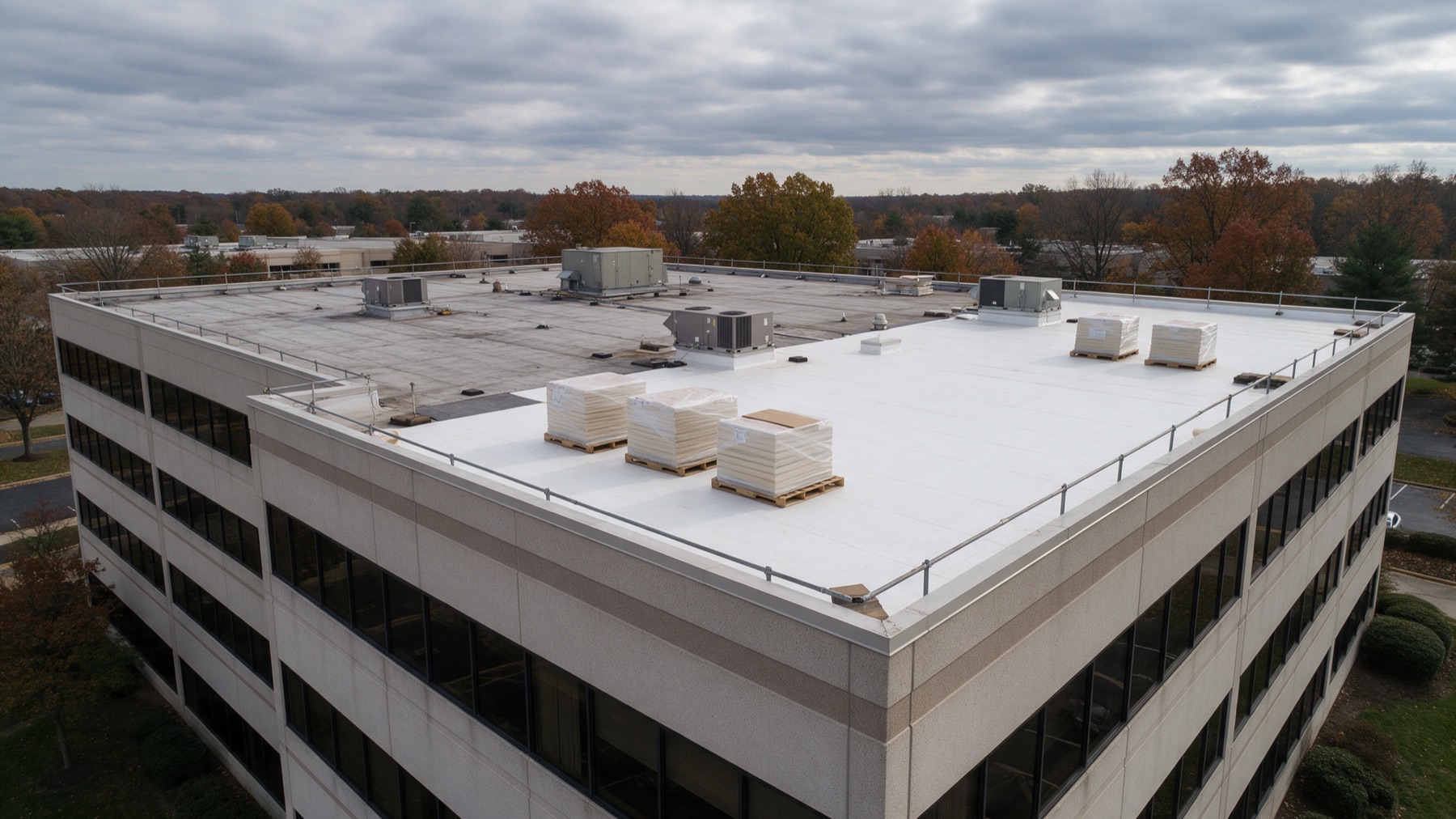
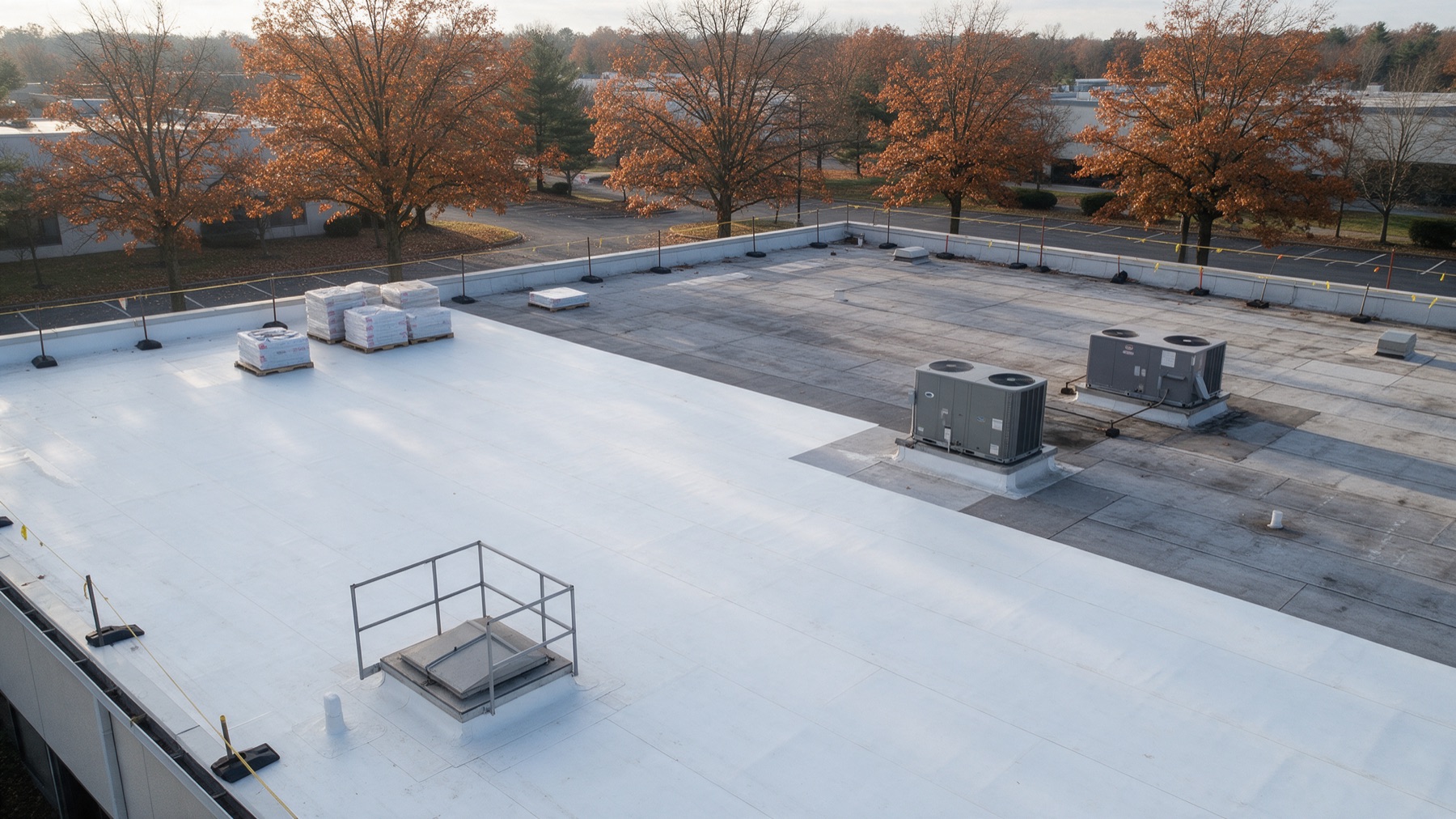
In practice, a tear-off on a building with thin above-deck insulation usually means adding insulation to reach the current requirement, and that raises the roof. Raising the roof affects parapet and flashing heights, door thresholds onto the roof, curb heights under rooftop units, and sometimes the edge metal. Ask every bidder to show the target R-value or U-factor, the insulation thickness that achieves it, and what it does to curbs and thresholds. Our bid comparison guide walks through reading those lines side by side.
Since ER 13-24 also adopts the 2021 IgCC, ask DPS whether any green-code provisions apply to your scope. Don't assume they do or don't.
Which counter: DPS, Rockville or Gaithersburg
Most of the county permits through DPS (2425 Reedie Drive, Wheaton; 240-777-0311; online applications through the DPS "Apply & ePay" portal, with plans uploaded through ePlans). But not every address inside the county is a DPS address:
- Rockville. The city's own Inspection Services Division issues building permits and inspects residential and commercial construction. Start at rockvillemd.gov/permit.
- Gaithersburg. The city runs its own permitting. Its commercial renovations checklist asks for an online application and a complete PDF plan set through the city portal. Plan review: 301-258-6330.
Don't read the homeowner list as yours. DPS's home improvements page lists "Roof (covering only)" under no-permit work. That page is written for houses, and we found no equivalent commercial exemption. For an apartment, condo, office or retail roof, assume a permit is needed, have the roofer confirm the permit type in writing, and have it pulled in the contractor's name.
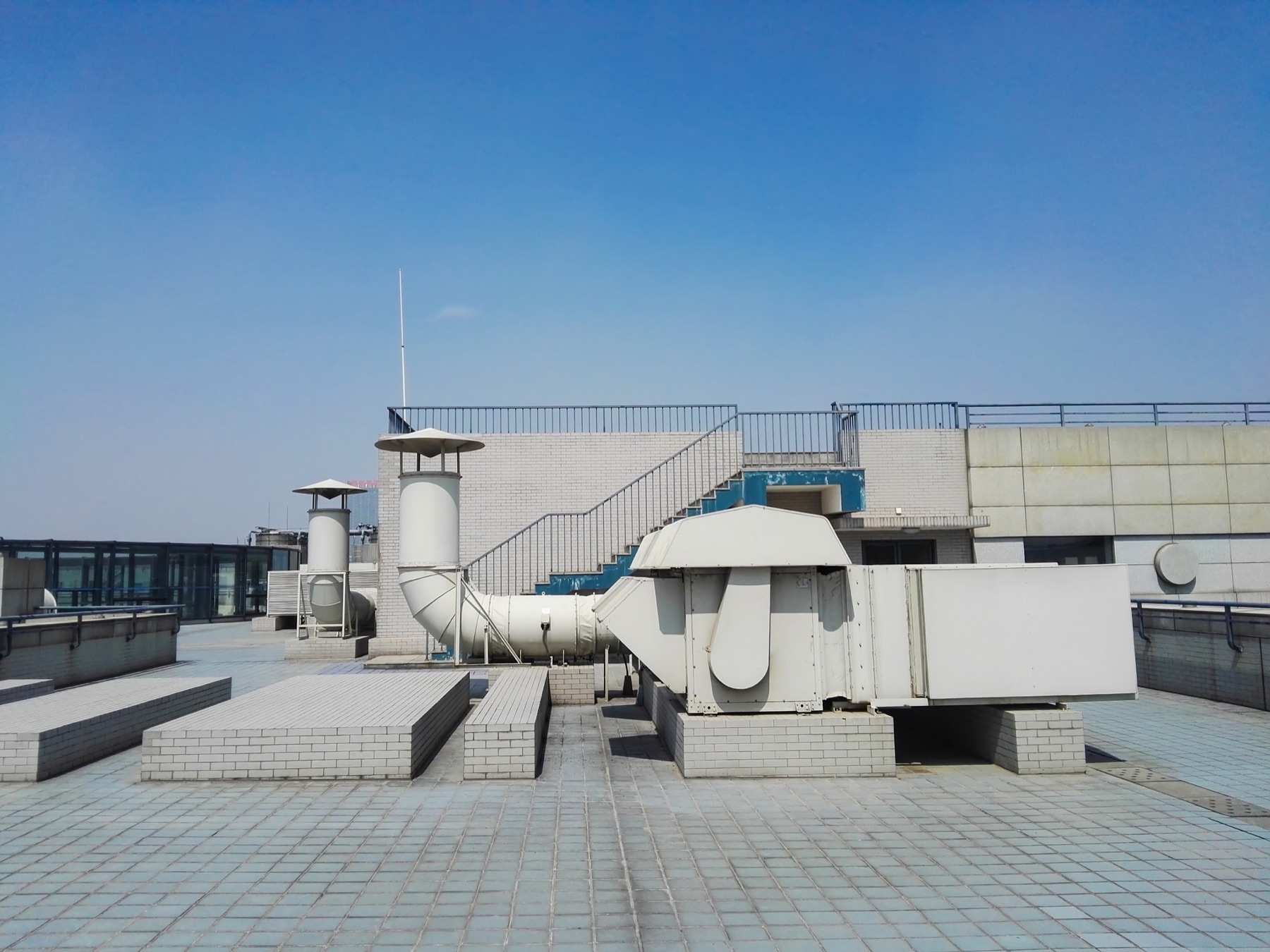
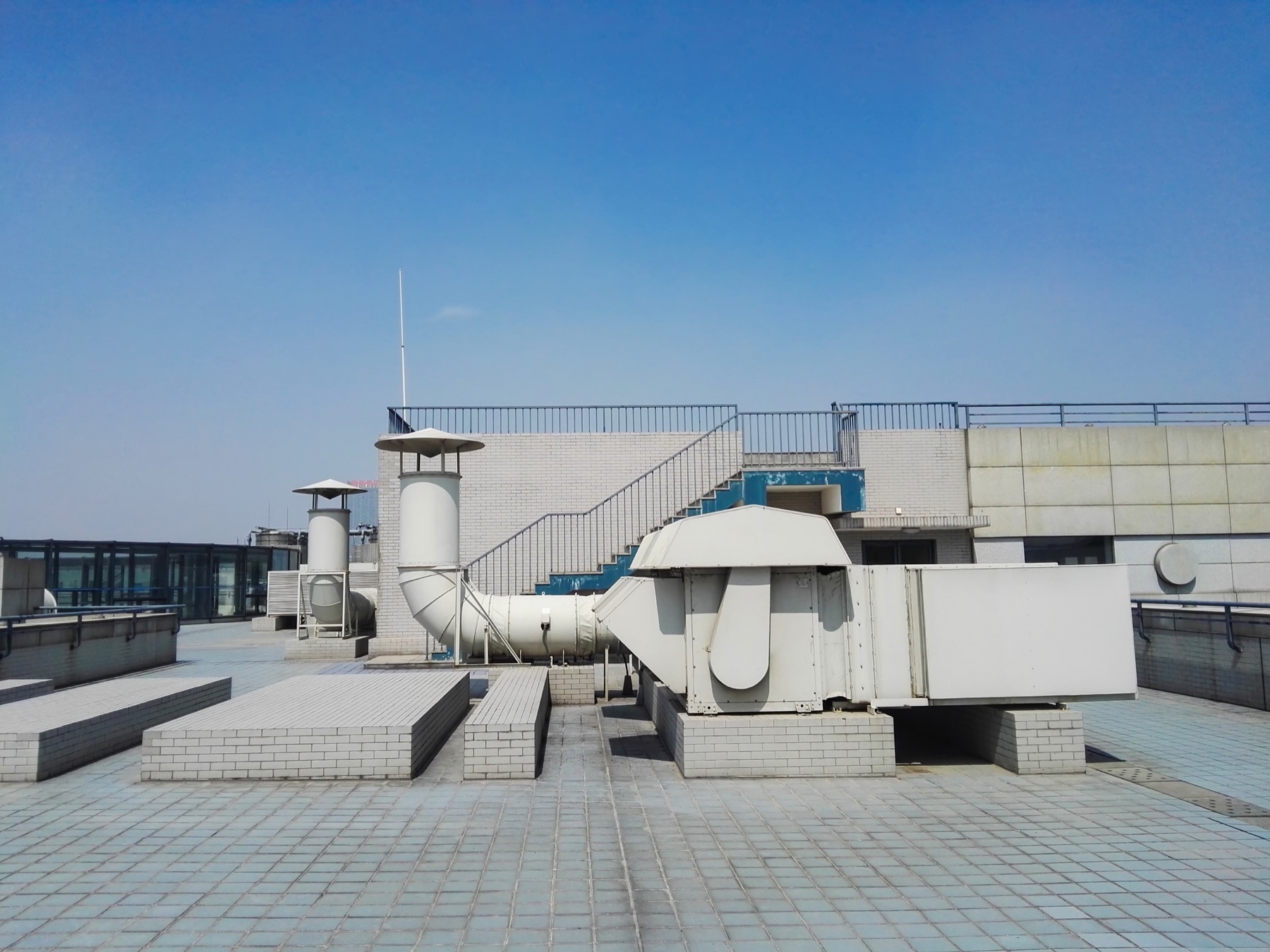
Rooftop equipment is separate. If units are disconnected, reset or replaced during the reroof, a mechanical permit may be needed, and that work belongs to licensed HVAC, electrical and gas trades, not the roofer's crew.
Historic districts add a step, not a veto
If the building is a designated historic resource or sits in a historic district (parts of Takoma Park, Garrett Park and Brookeville, among others), Montgomery Planning's Historic Preservation Commission is involved. Its published decisions show a consistent pattern. Strictly in-kind replacement that isn't visible from the street has been treated as needing no Historic Area Work Permit, though the owner still needs DPS building permits. A change of material or appearance needs a HAWP, and simple roof cases have been routed to staff-level approval. Build that time into the schedule before you set a start date.
What your team can settle before a roofer arrives
None of this needs anyone on the roof. It is desk work, and it makes every proposal you receive comparable.
If your team needs to look at the roof itself, use the OSHA low-slope rules and the edge table in our fall roof maintenance checklist. Don't go up on a wet, frosty or windy day.
When it becomes a roofer's job
- Deciding recover versus tear-off. That needs a moisture survey or test cuts, and a count of the existing layers.
- Designing the insulation to §C503.2.1 and working out what the extra height does at parapets, curbs and thresholds.
- Pulling the permit in the contractor's name, and coordinating the HAWP if one is needed.
- Disconnecting and resetting rooftop units. Licensed mechanical, electrical and gas trades only.
See commercial roof replacement for how we scope a tear-off, and our Montgomery County page for local building stock and condo-board timelines.
FAQ
Do I need a permit to replace a commercial roof in Montgomery County MD?
Plan on yes. DPS's "no permit" list for roof coverings is on its homeowner page and is aimed at houses. For a commercial building, have the roofer confirm the permit type with DPS (or Rockville or Gaithersburg, if your building is in those cities) and pull it in the contractor's name.
Which building code applies to a reroof in Montgomery County right now?
The 2021 ICC codes as adopted and amended by Executive Regulation 13-24, effective 10 December 2024. Applications filed from 31 March 2025 must comply. Check the county amendments with DPS for your scope.
Can we just put a new roof over the old one?
Sometimes. The 2021 IBC (§1512.2.1.1) does not allow a recover over a water-soaked or deteriorated roof, over slate or tile, or where there are already two or more roof coverings. Someone has to test for moisture before anyone can say yes.
Will we have to add insulation if we tear off the roof?
Usually, where the insulation sits entirely above the deck. IECC §C503.2.1 requires the replacement to meet the current envelope requirements and never to reduce the existing R-value. A recover is an exception, provided energy use does not increase.
Planning a Montgomery County reroof and want the code questions answered before the bids come in? Book a free 30-minute consultation at https://dmvcommercialroofing.com/#book or call 202-798-7663.
Header image: AI-generated illustration (Magnific).